Tag Page FloridaHistory

#FloridaHistory
LataraSpeaksTruth

Fort Mose was founded in 1738 just north of St. Augustine, Florida, and it does not get talked about enough. It punches a clean hole through the myth that freedom for Africans in “early America” only started later. Under Spanish Florida, it was called Gracia Real de Santa Teresa de Mosé. Governor Manuel de Montiano ordered it built as a fortified settlement where freedom seekers escaping British colonies could live as free people by law. Not a rumor…not a loophole…a recognized community with a name and a mission. Spain offered freedom with conditions. Convert to Catholicism, pledge loyalty to the Spanish Crown, and be willing to help defend the colony. Yes, it was politics aimed at weakening the British. But politics still opened a door…and people ran through it anyway. Fort Mose was not just a fort. It was a neighborhood. Families building lives with legal standing in a world designed to deny them personhood. The community organized a militia, led by Captain Francisco Menéndez, proof that Africans were not only surviving…they were holding rank, defending land, and negotiating power. Life there was never soft. In 1740, during General James Oglethorpe’s siege of St. Augustine, British forces took Mosé. Days later, Spanish troops, Indigenous allies, and the Black militia counterattacked in what’s remembered as the Battle of Bloody Mose. The fort was destroyed in the fighting, but the resistance was real, and the message was louder than the smoke. Still, the receipt stands. In 1738 there was a free Black community living under law on land that would become the United States. They ran, organized, fought, and built…long before the timeline most of us were handed even “starts.” #FortMose #BlackHistory #SpanishFlorida #StAugustine #FloridaHistory #ColonialHistory #FreedomSeekers #MaroonHistory #AfricanDiaspora #HiddenHistory

LataraSpeaksTruth

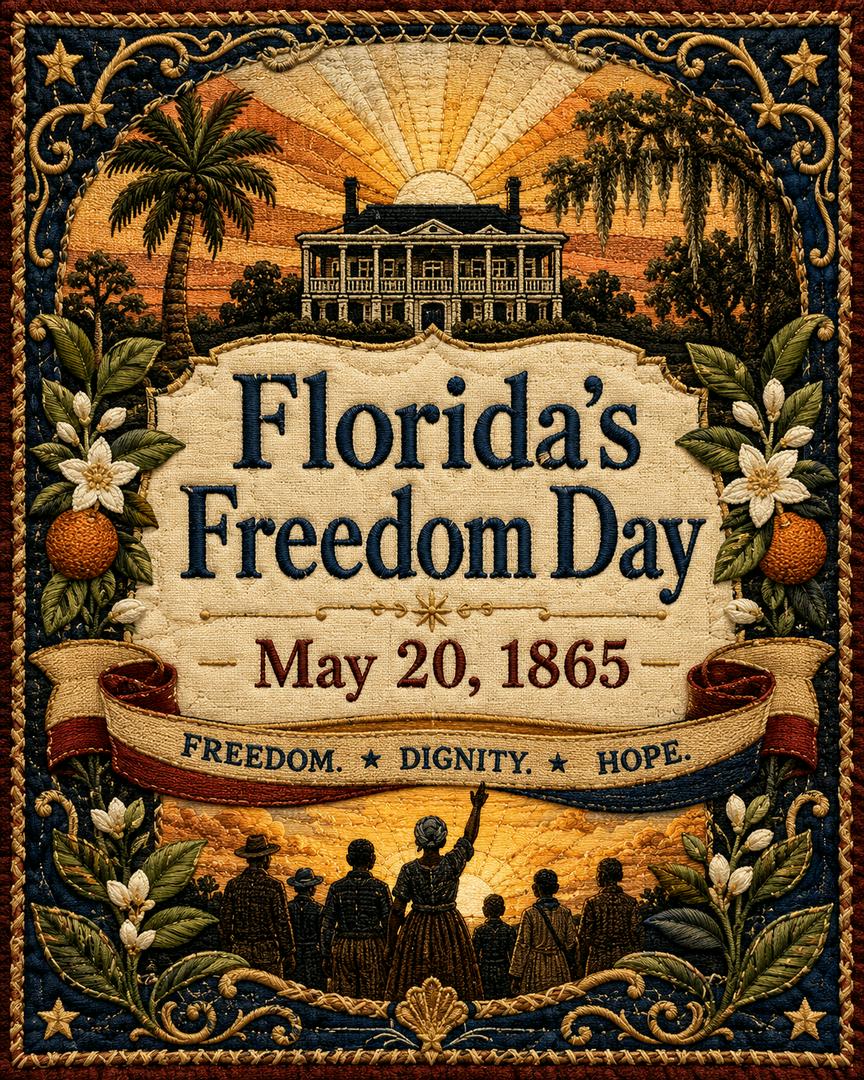
On May 20, 1865, freedom was publicly announced in Tallahassee, Florida. Union Brigadier General Edward M. McCook announced the Emancipation Proclamation from the steps of the Hagner House, now known as the Knott House. That moment came more than two years after President Abraham Lincoln issued the Emancipation Proclamation on January 1, 1863. That delay matters. For many enslaved people in Florida, freedom did not arrive when it was written on paper. It arrived when Union authority reached the state capital and those words were finally backed by power. By May 1865, the Civil War was ending, Confederate forces in Florida had surrendered, and Union control was being established. On May 20, McCook’s announcement declared the Emancipation Proclamation to be in effect in Florida’s capital. That is why May 20 is remembered as Florida’s Emancipation Day. This part of history reminds us that freedom in America did not arrive all at once. It came in different places at different times, shaped by war, distance, resistance, power, and delay. Texas has Juneteenth. Florida has May 20. Other communities have their own freedom dates too. Those dates do not compete with each other. They help complete the larger story. Because emancipation was not one simple moment. It was a process. It had to be declared. It had to be heard. It had to be enforced. And even after that, it still had to be defended. Florida’s Freedom Day matters because it shows how long people were forced to wait for a freedom that had already been promised. And that is a history worth remembering. #BlackHistory #AmericanHistory #FloridaHistory #EmancipationDay

LataraSpeaksTruth

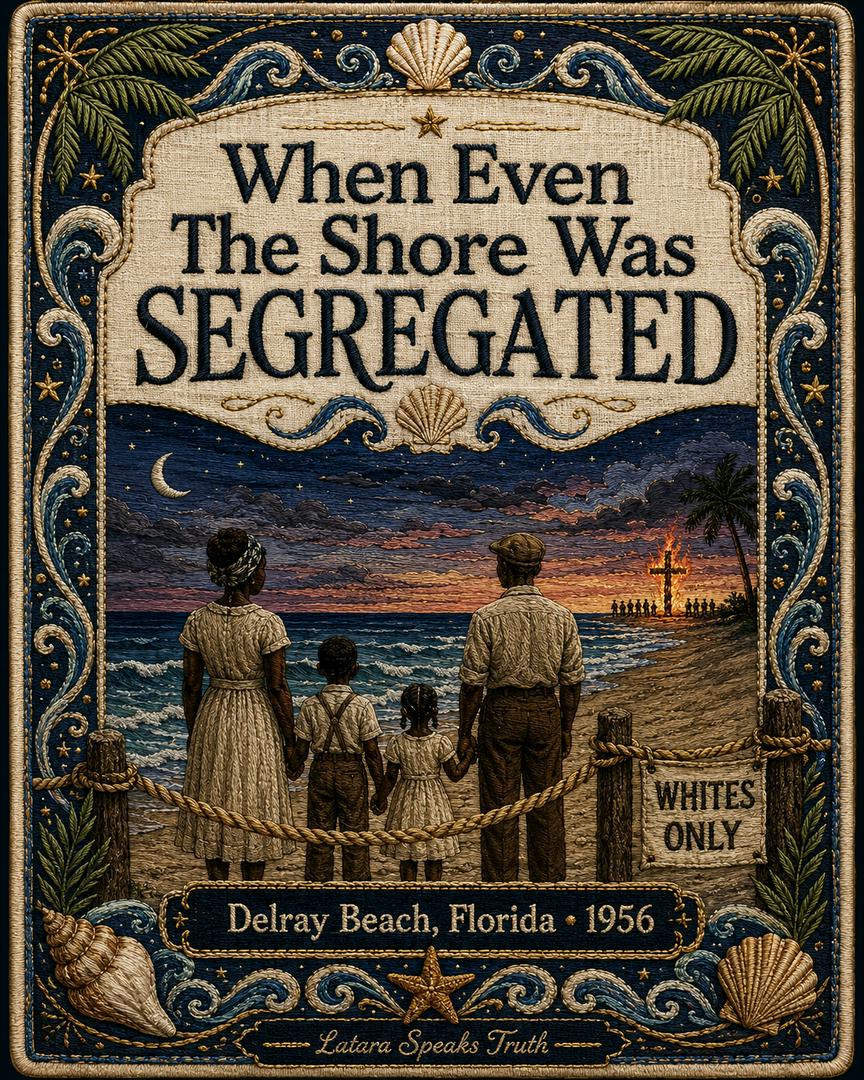
May 16, 1956, Delray Beach, Florida Some stories show how deep segregation really went. It was not just schools, buses, restaurants, or water fountains. In Delray Beach, Florida, even the ocean was treated like it belonged to one group of people. On May 16, 1956, white residents burned a cross to intimidate Black residents who were challenging segregated beach access. For decades, Black residents had been kept away from the city’s municipal beach, even though it was supposed to be public. The timing mattered. One day earlier, U.S. District Judge Emmett C. Choate had dismissed a federal lawsuit brought by nine Black Delray residents fighting for access to the beach. City officials claimed there was no written policy denying Black residents entry, but the reality on the ground told a different story. That cross was not just a symbol. It was a warning. It was meant to tell Black residents that even without a written rule, they were still expected to stay away. On May 20, when Black residents tried to use the beach, they were met by an angry white crowd demanding they leave. Instead of protecting equal access, local officials moved in the opposite direction. On May 23, 1956, Delray Beach passed a formal segregation ordinance barring Black residents from the municipal beach and pool. That is what makes this history so important. Segregation was not only enforced by law. It was enforced by fear, threats, mobs, and authorities who failed to hold people accountable. The beach should have been simple. Sand. Water. Sunlight. A place for families to breathe. But in Delray Beach, even that became a battleground. This was never just about recreation. It was about dignity, citizenship, and the right to exist freely in public spaces. The ocean was public. The exclusion was deliberate. #BlackHistory #FloridaHistory #DelrayBeach #HiddenHistory #CivilRightsHistory

You've reached the end!
Tag: FloridaHistory | LocalAll