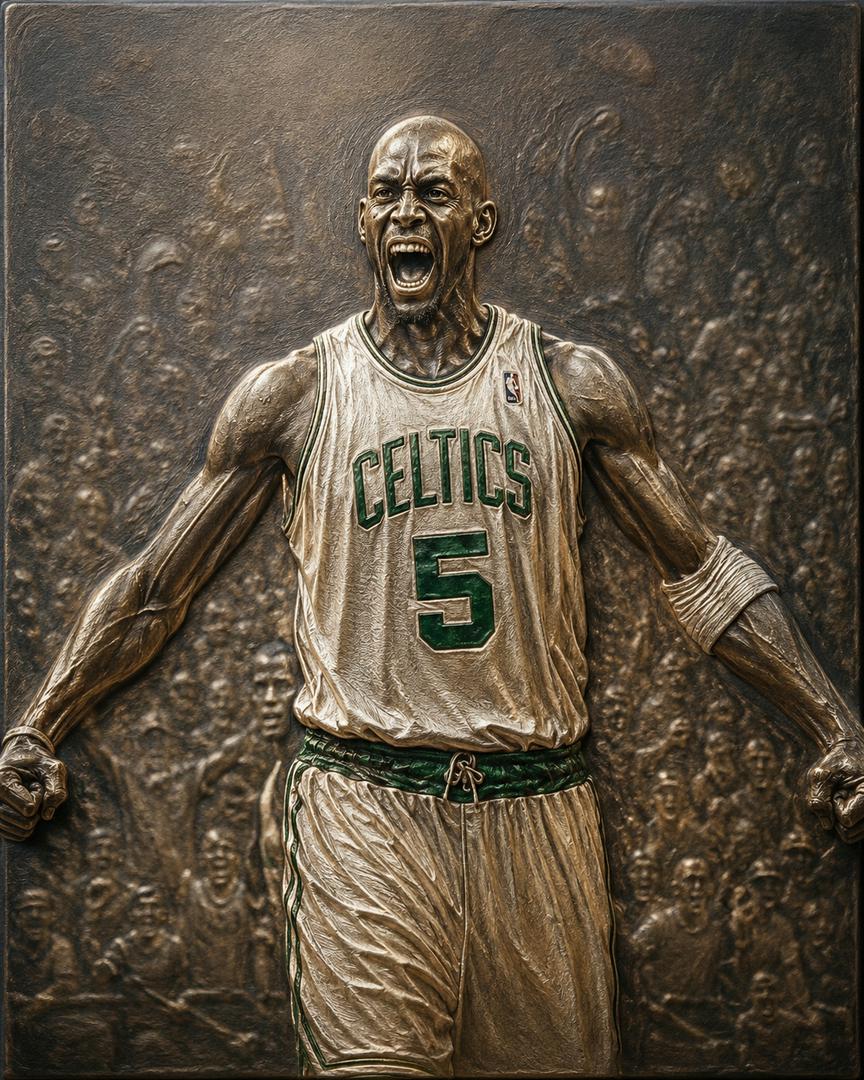
May 19, 1976, Kevin Garnett was born in Greenville, South Carolina.
Long before he became known as “The Big Ticket,” Garnett was a young player with a rare mix of size, fire, defense, and intensity. When the Minnesota Timberwolves drafted him with the No. 5 pick in 1995, he became one of the players who helped reopen the modern path from high school straight to the NBA.
And he did not enter quietly.
Garnett became the face of the Timberwolves, giving the franchise identity and leading it through its most important early years. He played with emotion you could see from the nosebleeds. Every rebound, every block, every scream after a big play felt like somebody putting his whole soul on the court.
His numbers speak for themselves. Garnett finished his NBA career averaging 17.8 points, 10 rebounds, and 3.7 assists per game. He became a 15-time NBA All-Star, a league MVP, a Defensive Player of the Year, an NBA champion, and one of the most respected power forwards in basketball history.
In 2007, Garnett joined the Boston Celtics alongside Paul Pierce and Ray Allen. One year later, Boston won the 2008 NBA championship, defeating the Los Angeles Lakers in six games and ending a 22-year title drought. Garnett was the defensive backbone of that team, and his famous emotional reaction after winning said everything: anything was possible.
But Garnett’s legacy is bigger than one ring. He changed how people looked at big men. He could defend, pass, score, rebound, lead, and set the tone. He played with old-school pride and new-school versatility before that combination became normal.
Kevin Garnett was named to the Basketball Hall of Fame’s Class of 2020, closing the book on a career that never felt ordinary. His impact was loud, emotional, intense, and unforgettable.
On May 19, we remember the birth of a player who brought fire to the game and left a permanent mark on NBA history.
#KevinGarnett #NBAHistory #BlackSportsHistory #BasketballHistory #Minnesota