Tag Page Bible

#Bible
LLama Loo

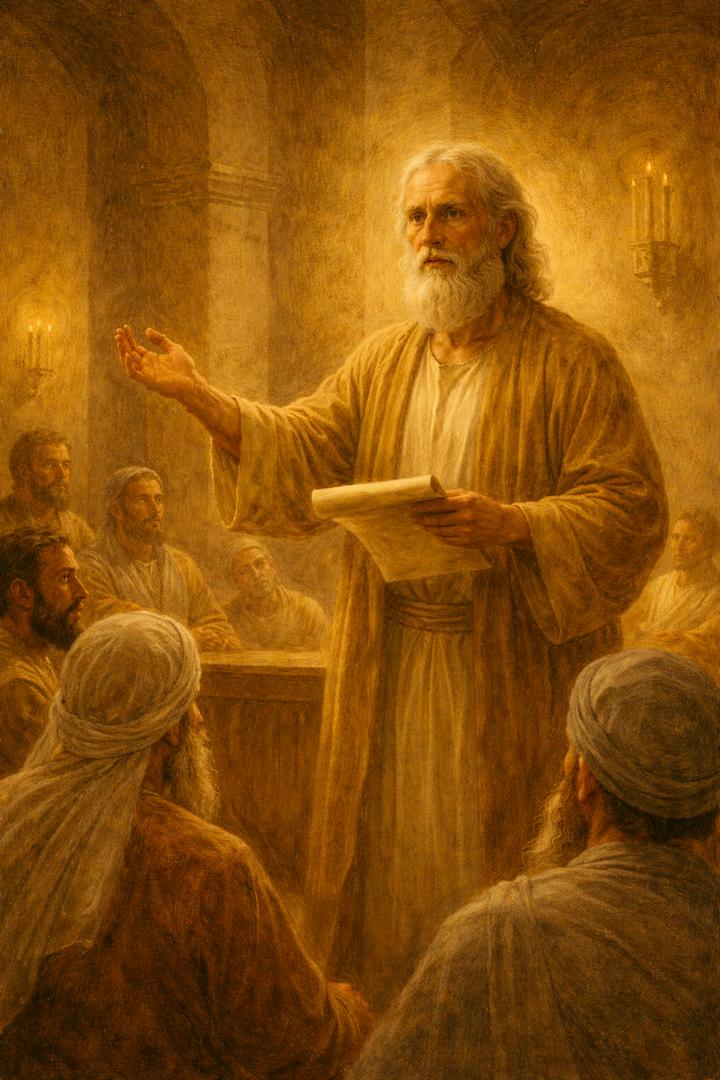
✨ Prophecy Fulfilled: The Life of Yeshua (Jesus) – Episode 49 “Woes to the Pharisees” (Matthew 23:1–39; Mark 12:38–40; Luke 20:45–47) The Temple courts fell into a heavy stillness. Yeshua stood before the crowds — disciples, pilgrims, scholars, and skeptics — and before the Pharisees who had spent the day attacking Him. This was His final public sermon before leaving the Temple forever. He lifted His voice, not with bitterness, but with the holy authority of a Judge and the breaking heart of a Father. “The scribes and Pharisees sit in Moses’ seat. So do what they tell you— but do not do what they do. For they preach, but do not practice.” A murmur rippled across the people. “They tie up heavy burdens and lay them on others’ shoulders, but they themselves won’t lift a finger to help.” Yeshua turned toward the Pharisees. The air trembled with truth about to fall. Woe One “Woe to you, scribes and Pharisees, hypocrites! You shut the kingdom of heaven in people’s faces.” Woe Two “Woe to you! You travel over land and sea to make a convert, and when you do, you make him twice the son of hell as yourselves.” Gasps echoed across the courtyard. Woe Three “Woe to you, blind guides! You swear by the gold of the temple and forget the God who dwells there.” Woe Four “Woe to you! You tithe mint and dill and cumin, but neglect justice, mercy, and faithfulness.” His voice cracked with grief, not anger: “These you ought to have done without neglecting the others.” Woe Five “Woe to you! You clean the outside of the cup, but inside are greed and self-indulgence.” Woe Six “Woe to you! You are like whitewashed tombs— beautiful on the outside, but inside full of dead men’s bones.” The Pharisees stiffened, but Yeshua pressed on. Woe Seven “Woe to you! You build tombs for the prophets and decorate the graves of the righteous… yet you are the sons of those who murdered them!” ✝️ CONTINUED IN COMMENTS ⬇️⬇️⬇️ #Bible #God #Jesus #BibleStudy #Help

LLama Loo

Zephaniah: A Brief Introduction to the Bible – Part 32

The prophet Zephaniah delivers a message both terrifying and hopeful. Writing during the reign of King Josiah (late 7th century BC), Zephaniah was a descendant of King Hezekiah, placing him within Judah’s royal lineage. His prophetic ministry likely came just before Josiah’s sweeping reforms—when idolatry, corruption, and complacency had reached their peak. The book opens with a chilling declaration: “I will utterly consume everything from the face of the land,” says the Lord (1:2). Zephaniah’s prophecy cuts across all boundaries—Judah, surrounding nations, and the entire earth—pointing toward a day of divine reckoning known as the Day of the Lord. It’s not limited to local judgment; it echoes forward to the end of the age when God will purge the world of wickedness. Zephaniah exposes hypocrisy among those who claimed to serve God yet bowed to idols, warning that comfort and indifference would not protect them. Yet amid the destruction, a remnant is promised—those humble enough to seek the Lord, do His justice, and walk in truth (2:3). The final chapter brings radiant hope. God will restore His people, gather the faithful from every nation, and rejoice over them with singing (3:17). It is one of Scripture’s most tender portraits of divine love—a Father rejoicing over His restored children. Zephaniah reminds us that judgment and mercy are not opposites but part of God’s redemptive plan. The same God who disciplines also delights. His warnings call us to repentance; His promises invite us into everlasting joy. 🙏🏼 CONTINUED IN COMMENTS ⬇️⬇️⬇️ #Bible #God #Jesus #BibleStudy #Help #Christian #Christ #Prophesy

Zephaniah: A Brief Introduction to the Bible – Part 32
LLama Loo

The Great Falling Away vs. The Great Awakening

When people talk about the “last days,” some picture only darkness, while others imagine a massive revival. Scripture actually presents both realities at once: a great falling away from truth, and a great awakening to Christ. The Great Falling Away The Apostle Paul cautioned believers: • “That Day will not come unless the falling away comes first” (2 Thessalonians 2:3). • “Some will abandon the faith and follow deceiving spirits” (1 Timothy 4:1). This isn’t about unbelievers rejecting God—they already do that. It’s about many who once claimed Christ drifting toward teachings that feel easier, yet stray from biblical truth (2 Timothy 4:3-4). The Great Awakening At the very same time, Jesus promised something powerful: • “This gospel of the kingdom will be preached in the whole world…and then the end will come” (Matthew 24:14). • “In the last days…I will pour out my Spirit on all people” (Acts 2:17). • John saw a “great multitude that no one could count” from every nation, standing before the Lamb (Revelation 7:9-14). So even as some turn away, countless others are discovering the truth of Yeshua and stepping into new life. Two Realities, One Timeline How can these opposite movements coexist? Scripture gives us glimpses: • Isaiah 60:1-2: Deep darkness covers the earth, yet God’s glory rises on His people. • Matthew 13:24-30: Wheat and weeds grow together until the harvest. • Romans 11:25-26: Some resist, yet salvation still breaks through. We are living in this overlap: deception rising while revival spreads. What It Means for Us The falling away warns us to stay anchored in Scripture and close to Jesus. The awakening calls us to share the Good News boldly, to shine in a world that desperately needs light. We don’t choose whether it’s apostasy or awakening—it’s both. But we can choose where we stand. “Arise, shine, for your light has come, and the glory of the Lord rises upon you” (Isaiah 60:1). ✝️ CONTINUED IN COMMENTS ⬇️⬇️⬇️ #Bible #God #Jesus

The Great Falling Away vs. The Great Awakening
LLama Loo

How Living Vertically Changed My Whole Life—for Good From the age of six until eighteen, I was raised in a foster home—not out of love, but as part of a financial arrangement between adults. Love was withheld. Abuse was allowed. Guidance and protection were absent. I learned early how to survive—but not how to be nurtured. By the grace of God—and through circumstances unrelated to spiritual intent—I was taken to church. It was not a vibrant congregation, but there was one teacher who truly believed in the saving grace of God. That mattered. A seed was planted, even if the soil was thin. When I left the foster home, life did not become peaceful. I lived in constant fight-or-flight, operating almost entirely on what I now understand as a horizontal plane. My focus was survival, self-protection, validation, and control. I believed in God, but my life was directed by fear rather than trust. Horizontal living looks outward for stability. It seeks meaning through relationships, accomplishments, distractions, or approval. When peace is tied to circumstances or people, it is always fragile. I spent years chasing a life that never delivered what it promised. That way of living led me through repeated trauma and loss. Again and again, I found myself empty—still searching, still striving, still wounded. I believed God existed, but I had not yet learned how to let Him lead. Eventually, life stripped away every illusion I relied on. At rock bottom, there was nothing left to manage, perform, or control. That was the moment everything shifted. I began to live vertically. Vertical living does not ignore pain or pretend life is easy. It simply changes the reference point. Instead of measuring life against circumstances or emotions, it becomes anchored upward—rooted in God rather than outcomes. ✝️ CONTINUED IN COMMENTS ⬇️⬇️⬇️ #Bible #God #Jesus #BibleStudy #Help #Afterlife #Christ #Prophesy #Heaven #Love #VictoryInChrist

Alexander News Show

HOLY SAIL Pottery fragments unearthed at ‘Noah’s Ark’ resting place dating back to biblical times ‘could prove boat was real’ A new archaeological discovery on Turkey’s Mount Ararat has reignited one of history’s most enduring mysteries: did Noah’s Ark actually exist? Researchers led by Prof. Dr. Faruk Kaya of Agri Ibrahim Cecen University revealed that pottery fragments dating back to the Chalcolithic era — roughly 5500 BC to 3000 BC — were uncovered near the Durupinar Formation, a boat‑shaped geological structure long rumored to be the Ark’s final resting place. The pieces were found during recent construction work near Dogubayazit, just steps from the outline many believers claim matches the biblical vessel. While the fragments don’t prove the Ark itself, they do confirm human presence in the region during the same broad timeframe associated with the Great Flood narrative. For Ark researchers, that’s a tantalizing clue: if people lived here during that era, the idea of a massive vessel landing in the mountains becomes less mythic and more plausible. The Durupinar site has fueled speculation for decades, drawing explorers, scientists, and religious pilgrims alike. Satellite images, ground‑penetrating radar, and geological surveys have all added layers of intrigue — but no definitive proof. Still, this latest find has injected new momentum into the debate. As Prof. Kaya noted, the fragments “may indicate human activity at the time traditionally linked to Noah,” a statement already stirring excitement across archaeological and religious communities. For now, the Ark remains elusive. But with every shard of ancient pottery, the line between legend and history gets just a little blurrier. #NoahArk #Noahsark #Bible #Alexandernewsshow.

You've reached the end!