Tag Page Astronomy

#Astronomy
justme

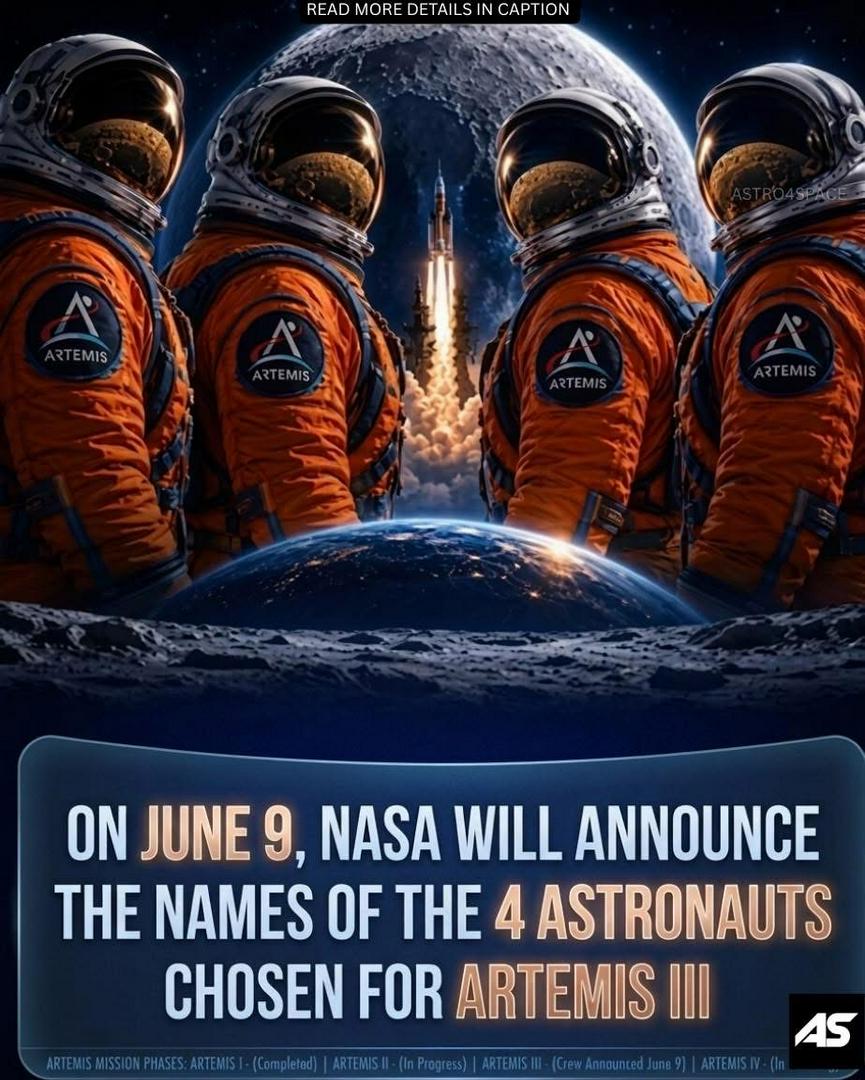
🚨 NASA is set to officially reveal the Artemis III crew on June 9 at 11:00 a.m. EDT during a live announcement from Johnson Space Center in Houston. This marks a major milestone for the future of human space exploration. The astronauts introduced during the event will be assigned to Artemis III — a mission once planned to land humans on the Moon for the first time since Apollo 17 in 1972. But NASA has now significantly reshaped the mission. Instead of being the first Artemis lunar landing, Artemis III is now expected to focus on vital orbital testing between the Orion spacecraft and commercial lunar landers being developed by SpaceX and Blue Origin. According to NASA, the mission will demonstrate key rendezvous and docking operations in Earth orbit — systems considered essential before astronauts attempt future landings near the Moon’s south pole. The mission is currently aiming for launch in 2027. As a result of the updated plan, Artemis IV is now expected to become the mission that finally places humans back on the lunar surface. At the same time, NASA is aggressively expanding its long-term Moon Base ambitions: • robotic cargo deliveries beginning in 2026 • privately developed lunar rovers • scouting drones exploring the lunar south pole • infrastructure designed for a sustained human presence on the Moon NASA says all of this is laying the foundation not just for returning to the Moon — but eventually for sending humans to Mars. More than half a century after Apollo, humanity’s next giant leap is no longer a distant dream. It’s already underway. 🌕🚀 #NASA #Artemis #ArtemisIII #MoonMission #MoonLanding #SpaceExploration #Astronomy #SpaceX #BlueOrigin #Mars #MoonBase #Orion #RocketLaunch #SpaceNews #FutureOfSpace

justme

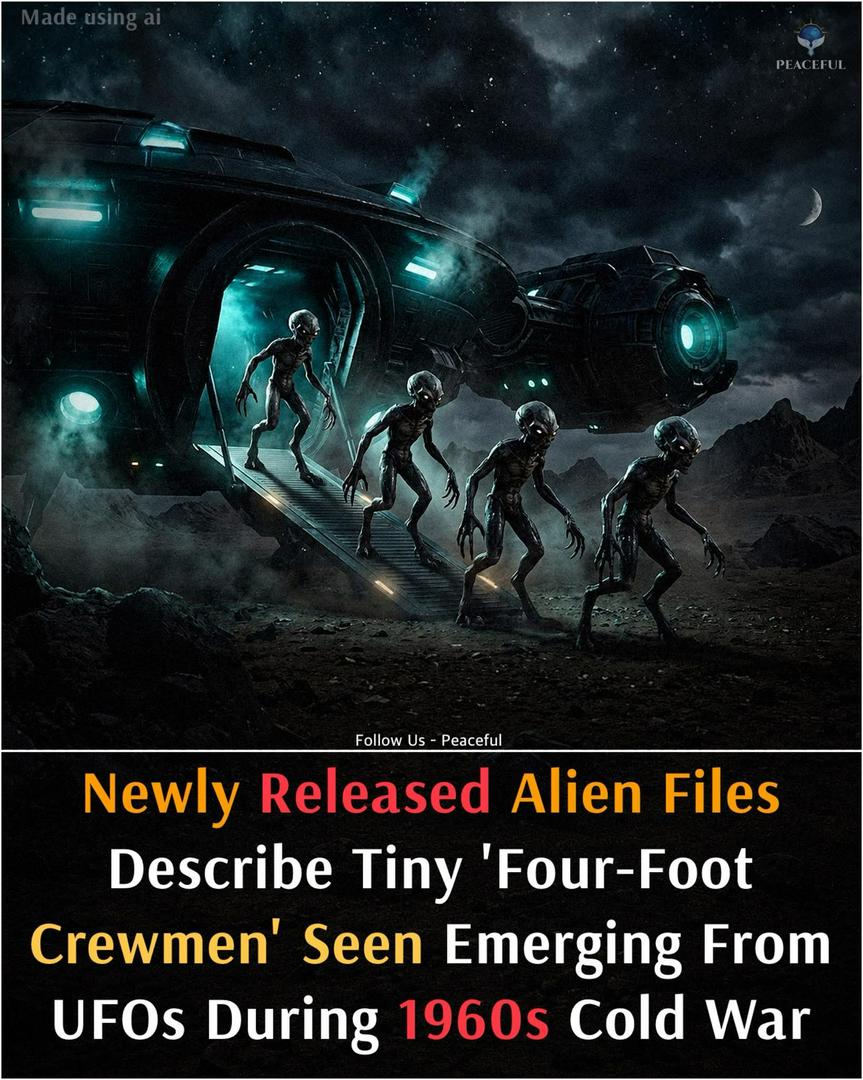
Newly released Pentagon and FBI records brought renewed attention to unusual Cold War-era UFO investigations describing small humanoid “crewmen” allegedly seen emerging from unidentified flying objects during the 1960s. The files were published as part of a wider UFO transparency initiative under President Trump. An FBI memo dated October 19, 1966, from San Francisco office to FBI Director J Edgar Hoover stated “1965 was the year of the greatest number of UFO sightings.” It summarized reports of metallic craft capable of hovering silently and traveling at “fantastic speeds.” Witnesses described “crewmen” as “three and a half to four feet tall, wearing what appear to be space suits and helmets.” Files also referred to claims of recovered wreckage from crashed flying saucers with unusual metallic debris. #fblifestyle #astronomy #earth

justme

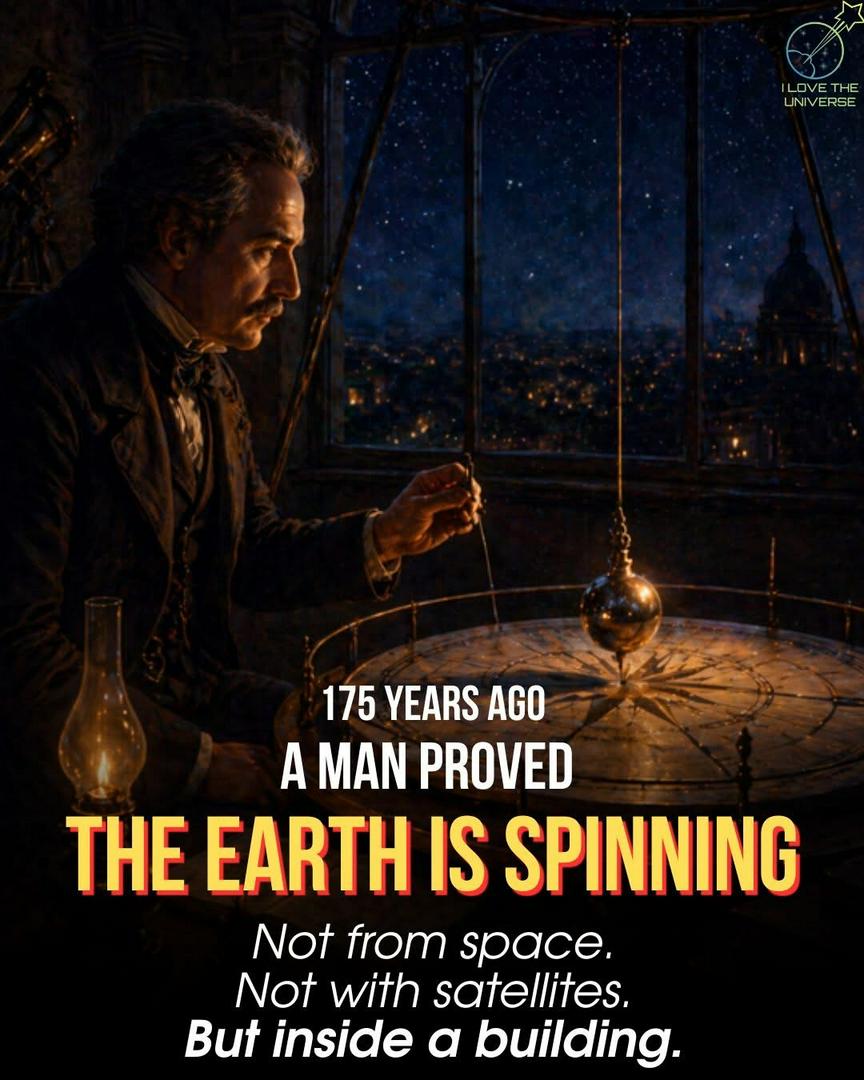
In 1851, a simple experiment proved that Earth is spinning. Not from space. Not with satellites. But inside a building… with a swinging weight. For centuries, people believed that Earth rotates. But proving it was another challenge. The French physicist Léon Foucault came up with a brilliant idea. He suspended a heavy metal ball from a long wire and set it in motion. Back and forth… perfectly steady. At first glance, nothing seemed unusual. But slowly, something incredible happened. The direction of the swing began to change. Not because the pendulum moved differently… but because the Earth beneath it was turning. The pendulum kept its direction in space. The ground did not. With a single, elegant experiment, Foucault made the rotation of Earth visible. No rockets. No space travel. Just a swinging weight… revealing that our planet is constantly in motion. #Science #Physics #Earth #Astronomy #DidYouKnow #ScienceFacts #Cosmos #Universe #STEM #SpaceScience

justme

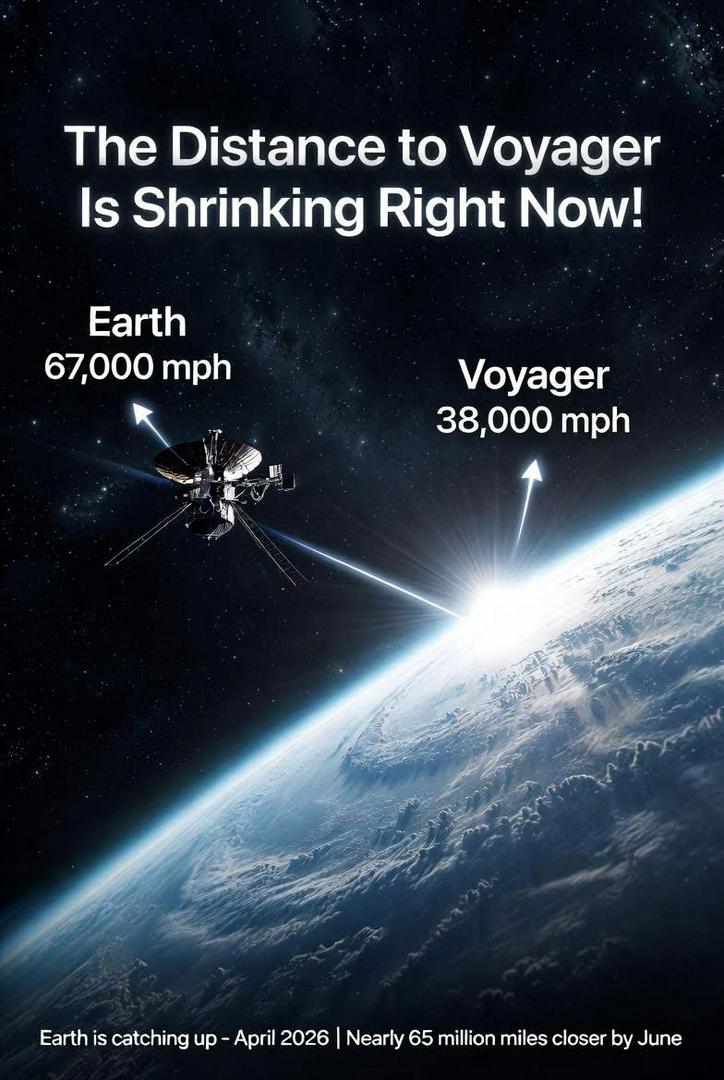
🌍 Mind-Blowing Fact: The Distance Between Voyager and Earth Is Currently Shrinking! 🚀 For nearly 50 years, Voyager 1 and Voyager 2 have been speeding away from the Sun at up to 38,000 mph, now deep in interstellar space. Yet right now (and every year from late February to early June), the distance to Earth is actually decreasing — by millions of miles! Why? Earth orbits the Sun at a blistering 67,000 mph — much faster than the Voyagers. As our planet swings around to the same side of the Sun as the probes, we’re catching up to them. For example, Voyager 2 is shrinking its distance by about 0.69 AU (nearly 65 million miles) between February and June 2026. By early June, it will be closer than it was in February! Once Earth passes and heads the other way, the distance will start growing again — forever. Our tiny blue planet is still playing cosmic catch-up with its distant robotic ambassadors. What do you find more amazing — that the Voyagers are still communicating after 50 years, or that Earth can “catch up” to them every year? Drop your thoughts below 👇 and tag a space lover who needs to see this! #Voyager #Voyager1 #Voyager2 #InterstellarSpace #NASA #Astronomy #SpaceFacts #Science

justme

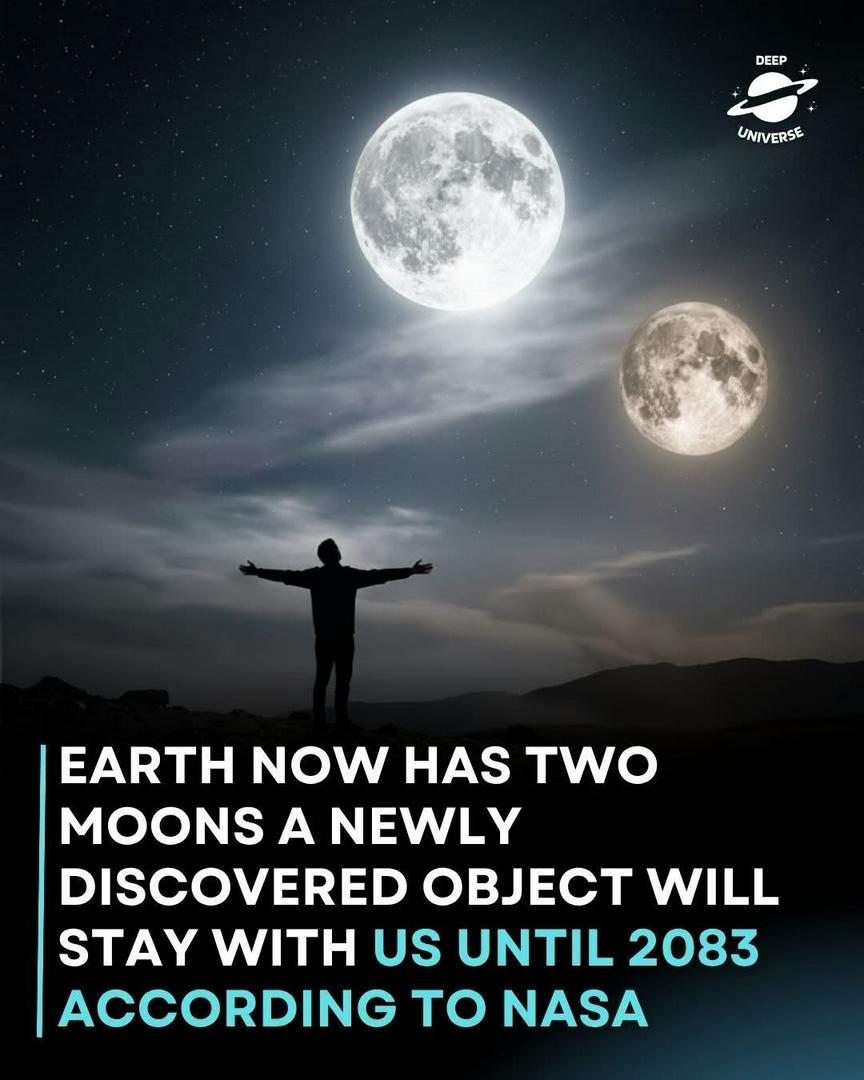
Astronomers have identified a small near-Earth asteroid temporarily captured by Earth’s gravity, creating the rare illusion of a second moon sharing our skies and orbit for a limited period, a finding that has sparked widespread fascination and confusion across science communities and social media. The object, believed to be a few meters to around 10 meters wide, follows a horseshoe-like path influenced by Earth’s gravitational pull and the Sun’s dominant force. Observations from ground-based telescopes and NASA-supported surveys suggest it is not a permanent satellite but a transient visitor, similar to other mini-moon events recorded in recent years across observatories worldwide. Scientists explain that these temporary moons form when small asteroids drift close enough to Earth to be trapped briefly in its gravitational field before escaping back into solar orbit. A key insight from recent studies shows that such captures may be more common than once thought, but most remain undetected due to their small size and faint reflectivity. Beyond the data, the discovery reminds us how dynamic and crowded near-Earth space really is, where invisible objects quietly move alongside our planet for weeks or months without notice. It also highlights how modern astronomy is constantly refining our understanding of what counts as a 'moon' in a universe filled with shifting gravitational relationships. Even as headlines simplify it into a second moon, the reality is more subtle and fleeting, yet no less remarkable. It is a brief companion in Earth’s long journey around the Sun, leaving behind a reminder that the cosmos still holds quiet surprises waiting just beyond routine observation. #DeepUniverse #fblifestyle #SpaceDiscovery #Cosmos #Universe #Science #Astronomy #UnknownPhenomena #NearEarthObjects #SpaceScience

justme

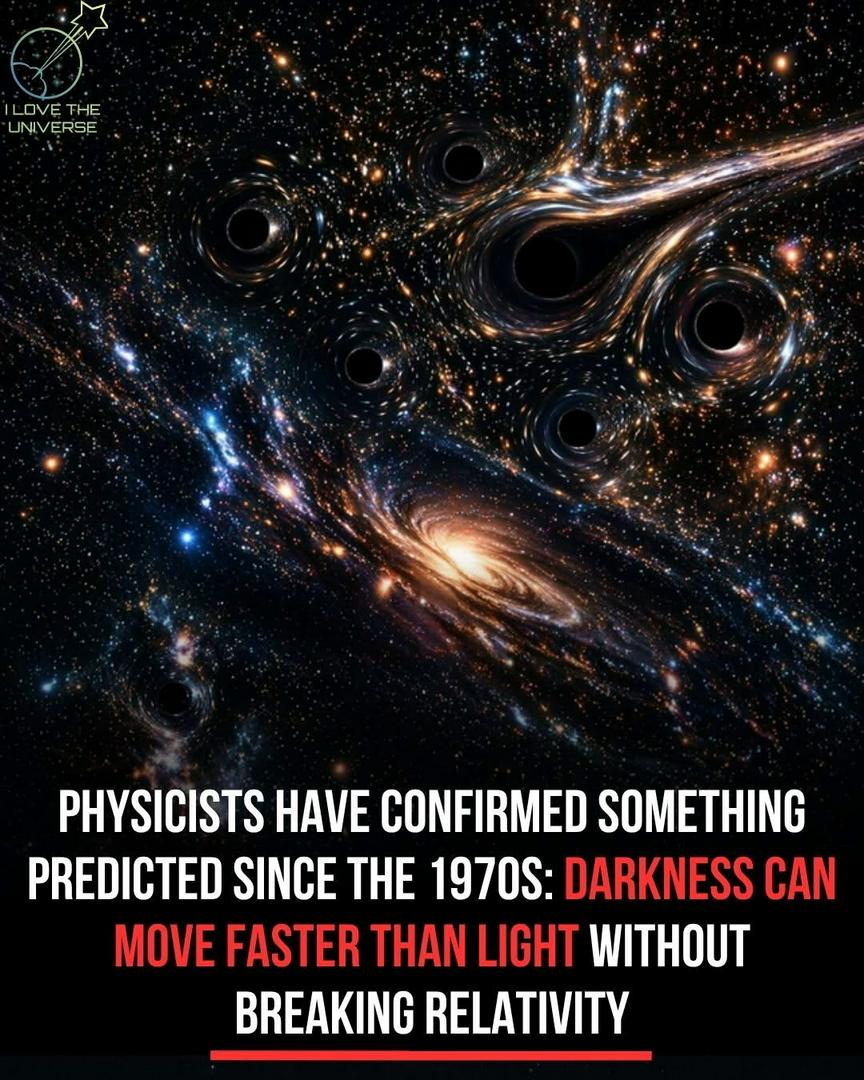
🚨 Something impossible just happened… or did it? Scientists have just observed motion that appears to be faster than light — and somehow… it doesn’t break physics. 🤯✨ But here’s the twist: What they saw wasn’t a particle, not even energy… It was pure nothingness. Inside exotic materials like boron nitride, waves of light and sound interact in such a precise way that they cancel each other out — creating tiny moving “points of darkness.” ⚫ And these dark points? They can move faster than light. No rules broken. No paradoxes. Just reality being far stranger than we imagined. Because these points carry no mass, no energy, no information, Einstein’s limits remain untouched — yet we’re witnessing something that looks like it defies them. 👉 And here’s something even more fascinating: Back in the 1970s, physicists had already predicted that such “points of nothing” could exist and behave in unusual ways — possibly even appearing to move faster than light. At the time, it was just theory. Today, we’re finally watching it happen. 👉 Think about that for a second… We’re now able to track the motion of nothing — moving faster than the fastest thing in the Universe. This discovery isn’t just mind-blowing… It could change how we study waves, light, and even quantum systems — unlocking ways to observe processes that were simply invisible before. The Universe keeps reminding us: The deeper we look… the weirder it gets. 🌌 💬 What do you think — is this the beginning of something bigger? 🔁 Share this with someone who loves space & physics! #Space #Physics #Science #Universe #MindBlown #Quantum #LightSpeed #Astronomy #DidYouKnow 🚀

justme

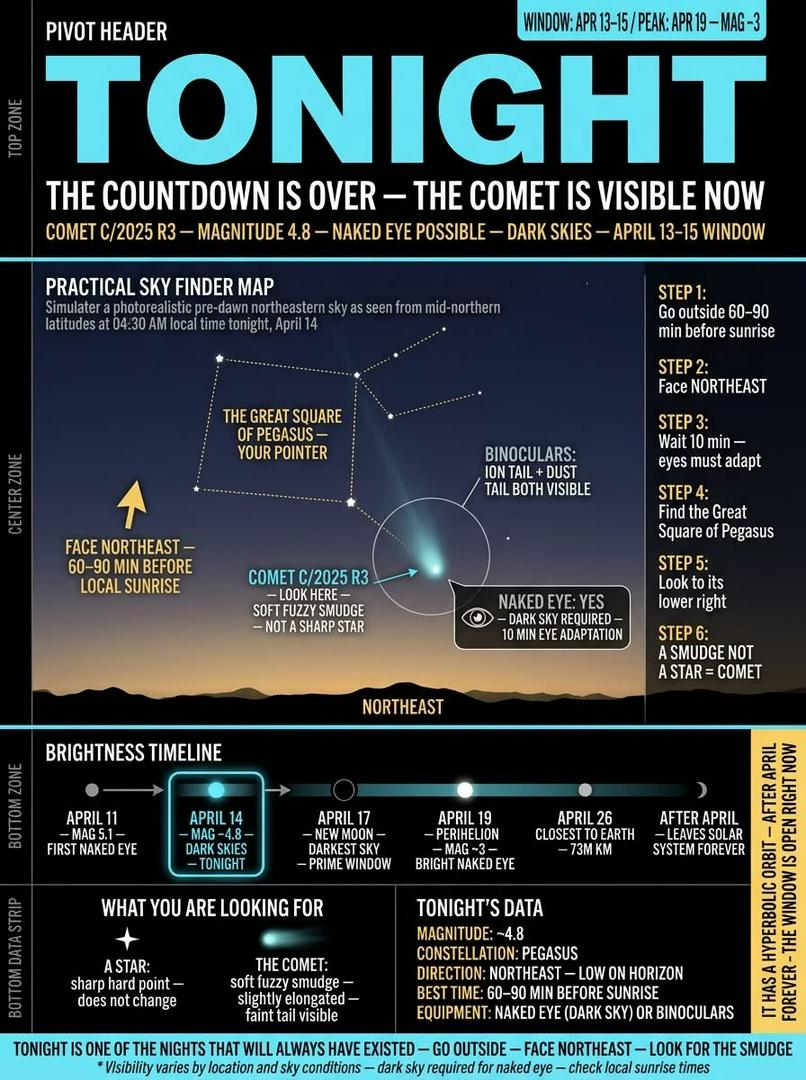
The countdown is over. You can go outside and try to see it tonight. Comet C/2025 R3 PanSTARRS is now a naked-eye target in dark skies. Not in 6 days. Not in 4 days. Tonight. Here is exactly what to do. Go outside 60 to 90 minutes before your local sunrise. Face northeast. Let your eyes adapt to the darkness for at least 10 minutes — this is not optional. The comet is at magnitude 4.8 and sitting in the constellation Pegasus, just east of the Great Square — four stars forming a large square low in the pre-dawn northeastern sky. The Great Square is your pointer. Once you find it, look to its lower right. You are looking for something that does not look like a star. A star is a point. Sharp, hard, and perfectly still. This comet is a smudge. A soft, slightly elongated blur — brighter at the center and fading at the edges, with a faint tail extending northwest away from the Sun. It will not look dramatic from a city. From a dark field away from streetlights, binoculars will show it clearly — a distinct fuzzy object with a visible tail. The optimal naked-eye window is April 13 to 15. Tonight is inside that window. The New Moon on April 17 will darken the sky further. The peak comes at perihelion on April 19 when the comet is forecast to reach magnitude 3 — as bright as a moderately bright star. But the window where it is naked-eye accessible under good conditions — without needing peak brightness — is now. Tonight. What you need: dark sky, 10 minutes of eye adaptation, and the patience to look twice. If you see a soft glow that doesn't look quite like a star — you found it. It has a hyperbolic orbit. After April, it leaves the solar system forever. Tonight is one of the nights that will always have existed. Visibility varies by location — check local astronomical timings. #MoonlitEarth #CometC2025R3 #LookUpTonight #NakedEye #CometWatch #Astronomy #Comet2026

justme

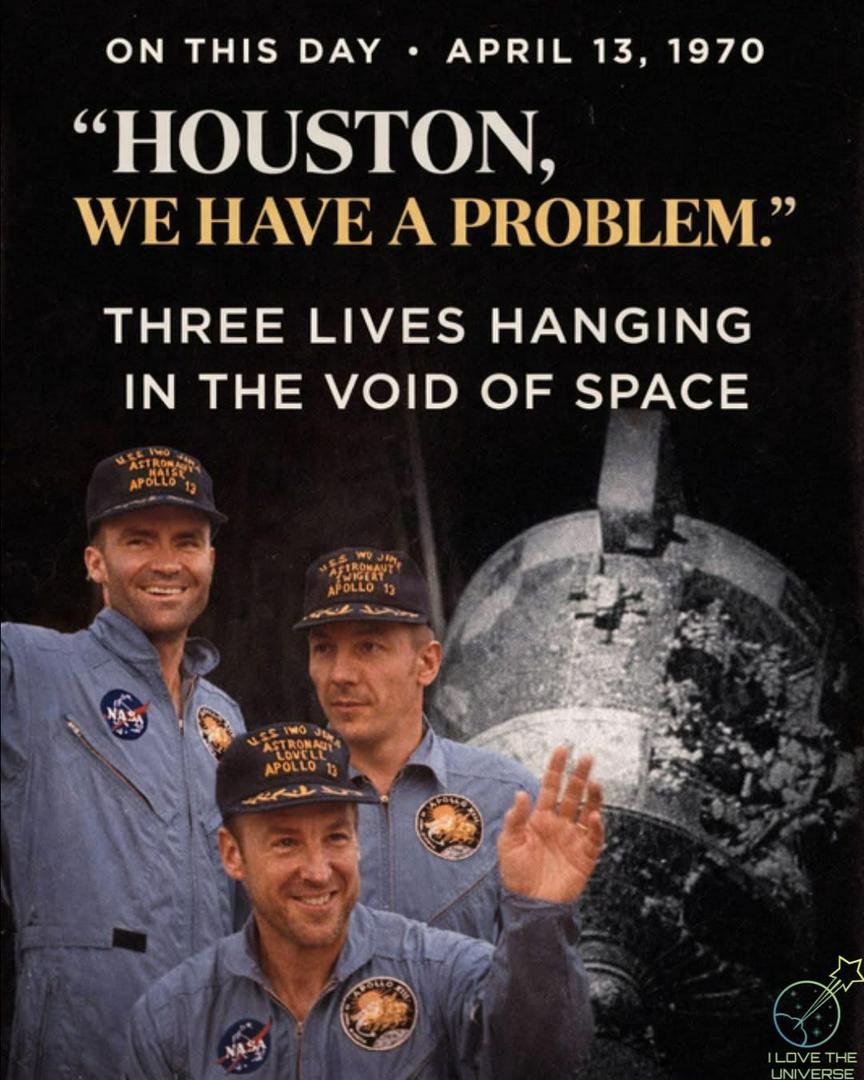
🚀 Apollo 13 — when everything went wrong… and humanity refused to lose On this day, April 13, 1970 — nearly 320,000 kilometers from Earth — an ordinary sentence turned into one of the most chilling moments in space history: “Houston, we’ve had a problem.” A sudden explosion ripped through the service module of Apollo 13, crippling the spacecraft. Oxygen was leaking into space. Power was failing. The Moon landing was instantly abandoned. Three astronauts — Jim Lovell, Jack Swigert, and Fred Haise — were no longer explorers. They were fighting to survive. What followed was not just a mission… It was one of the greatest rescue efforts in human history. Back on Earth, hundreds of engineers at NASA worked around the clock. No sleep. No margin for error. Every calculation mattered. Every decision could mean life or death. They turned the lunar module into a lifeboat. They improvised solutions never tested before. They built survival plans out of pure ingenuity and desperation. At one point, rising carbon dioxide levels threatened to suffocate the crew — until engineers famously created a workaround using nothing but materials available onboard. This was humanity at its absolute best. Against impossible odds, Apollo 13 didn’t land on the Moon. But it did something even greater. It brought its crew home. Alive. The story became legendary — and was later immortalized in the film Apollo 13, starring Tom Hanks — but no movie can fully capture the tension, the fear, and the brilliance of those real moments. Because this wasn’t fiction. This was real. And it proved something we still believe today: Even in the darkest moment… humanity finds a way. #Apollo13 #NASA #Space #Astronomy #History #OnThisDay #Explore #NeverGiveUp

justme

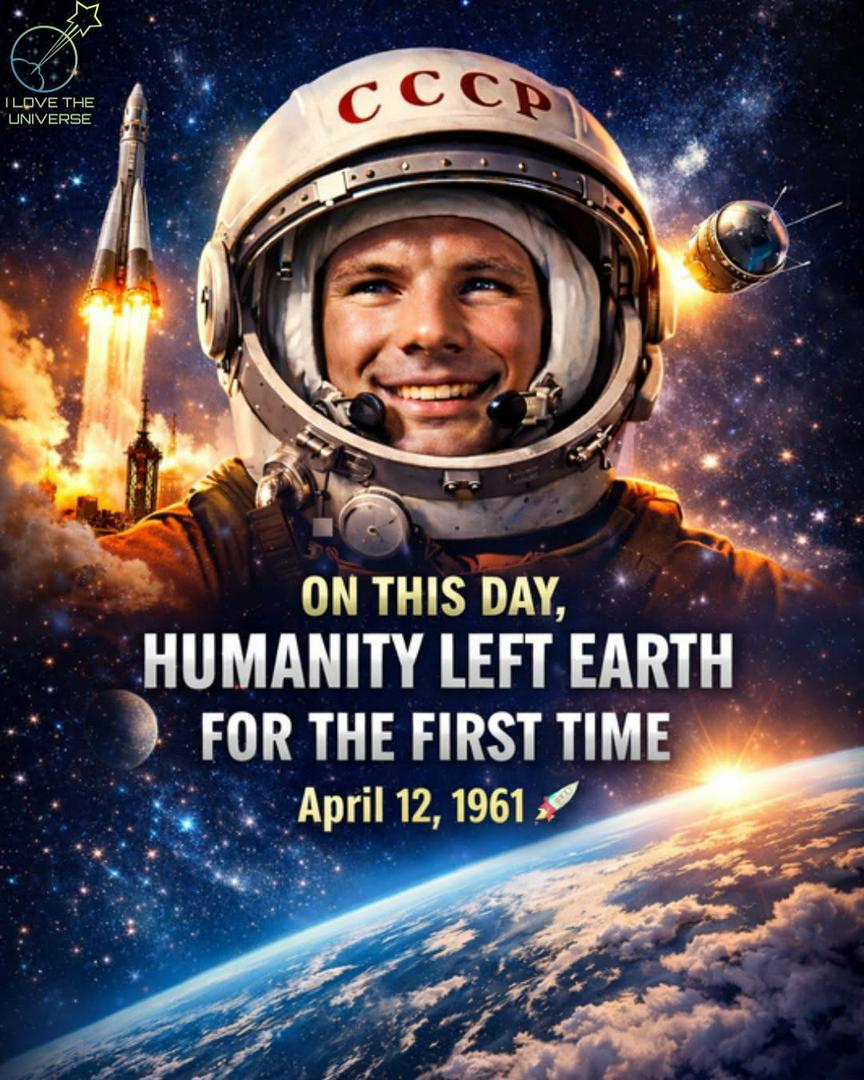
He didn’t just go to space… He changed humanity forever. 🚀 On April 12, 1961, Yuri Gagarin became the first human to leave Earth. In just 108 minutes, aboard Vostok 1, he orbited our planet once… But what he really did was something far bigger. He proved that we are not bound to this world. For the first time in history, a human looked back at Earth not as a place… but as a fragile blue world floating in the infinite dark. 🌍 No borders. No countries. Just one home. That single flight ignited a fire that still burns today — from the Moon landings… to Mars dreams… to the missions happening right now. And maybe the most powerful part? 👉 Every astronaut since… every rocket… every mission… exists because of that one moment. Because someone dared to go first. We didn’t just reach space that day… we discovered who we are capable of becoming. We are explorers. We are dreamers. And space is only the beginning. — If this moment gives you chills… you’re not alone. Share it. Let more people feel it. 🌌 #Space #YuriGagarin #April12 #Humanity #Astronomy #Cosmos #SpaceExploration #NASA #History #Universe #Earth #Inspiration