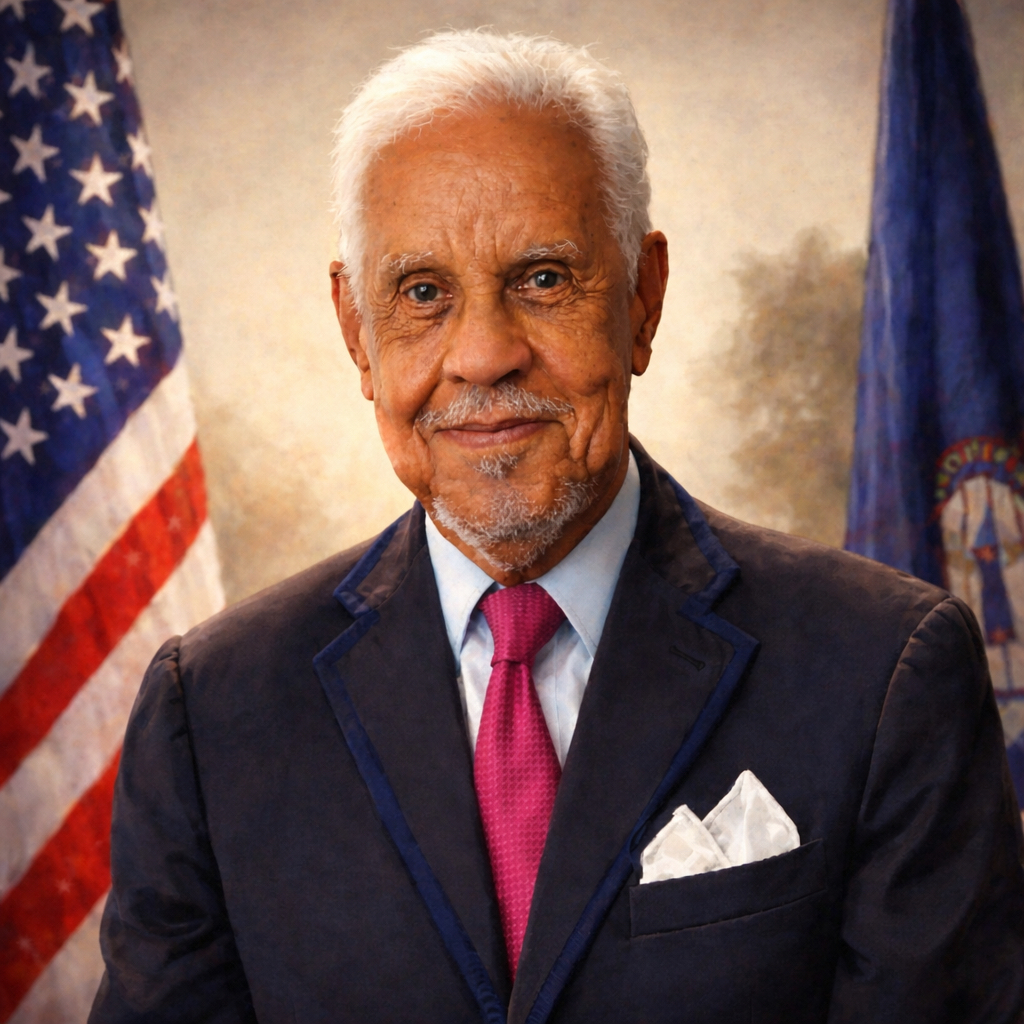
On January 13, 1990, L. Douglas Wilder was sworn in as governor of Virginia, becoming the first African American ever elected governor of any U.S. state. That moment did not arrive wrapped in celebration alone. It arrived heavy with history, expectation, and the quiet understanding that something permanent had just shifted.
Virginia was not a neutral stage. It was a former capital of the Confederacy, a state shaped by laws and customs designed to keep power narrowly held. Wilder did not inherit that history. He confronted it directly by winning. No appointment. No workaround. Just votes, counted and certified, placing him in an office that had never before been occupied by someone who looked like him.
The significance of that day stretched far beyond Richmond. Wilder’s inauguration challenged a long-standing assumption about who could govern at the highest levels of state power. It forced institutions to reconcile with the fact that progress was no longer theoretical. It was sworn in, standing at the podium, ready to lead.
Being first came with scrutiny. Every decision carried symbolic weight. Every misstep risked being treated as confirmation rather than context. Yet Wilder governed with precision and restraint, focusing on fiscal responsibility, education, and public safety, refusing to perform history instead of making it.
January 13, 1990 stands as a reminder that progress does not always arrive loudly. Sometimes it arrives formally, constitutionally, and undeniably. A door once closed did not creak open. It swung, and it stayed that way.
#OnThisDay #January13 #USHistory #PoliticalHistory #VirginiaHistory #HistoricFirst #AmericanLeadership #BlackExcellence #HistoryMatters