1/1

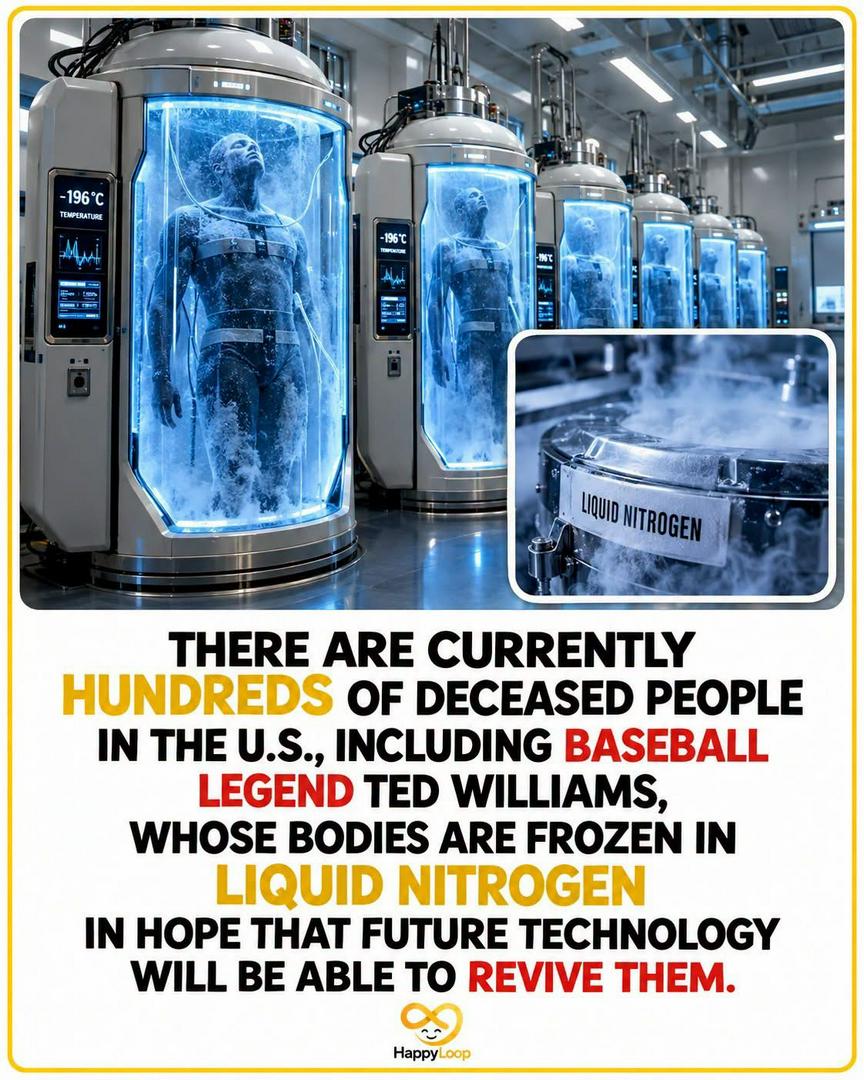
🧊 DID YOU KNOW? Imagine a technology that attempts to preserve a person’s body at temperatures so cold that ordinary biological activity essentially stops — with the hope that science in the future might one day be able to repair the damage and restore life. This is the idea behind cryonics. After a person is legally declared dead, some cryonics organizations attempt to cool and preserve the body, or sometimes only the brain, at extremely low temperatures using liquid nitrogen, which is maintained at about −196°C (−321°F). The goal is not to “freeze someone alive.” Cryonics begins after legal death, and the people undergoing preservation are not currently alive or capable of being revived. One of the most famous cases is Ted Williams, the legendary American baseball player, whose body was cryopreserved after his death in 2002. Today, hundreds of people are believed to be undergoing cryonic preservation in specialized facilities. But there is a crucial scientific catch: no human preserved through cryonics has ever been successfully revived. The hope of future revival remains speculative, and current medical technology cannot reverse the extensive biological damage associated with death and cryopreservation. So cryonics is less about bringing people back today—and more about placing a bet on what future science might someday make possible. 🔬❄️ A fascinating reminder that some of the biggest questions in science are still unanswered. 🧠✨
2 days ago
write a comment...