1/2


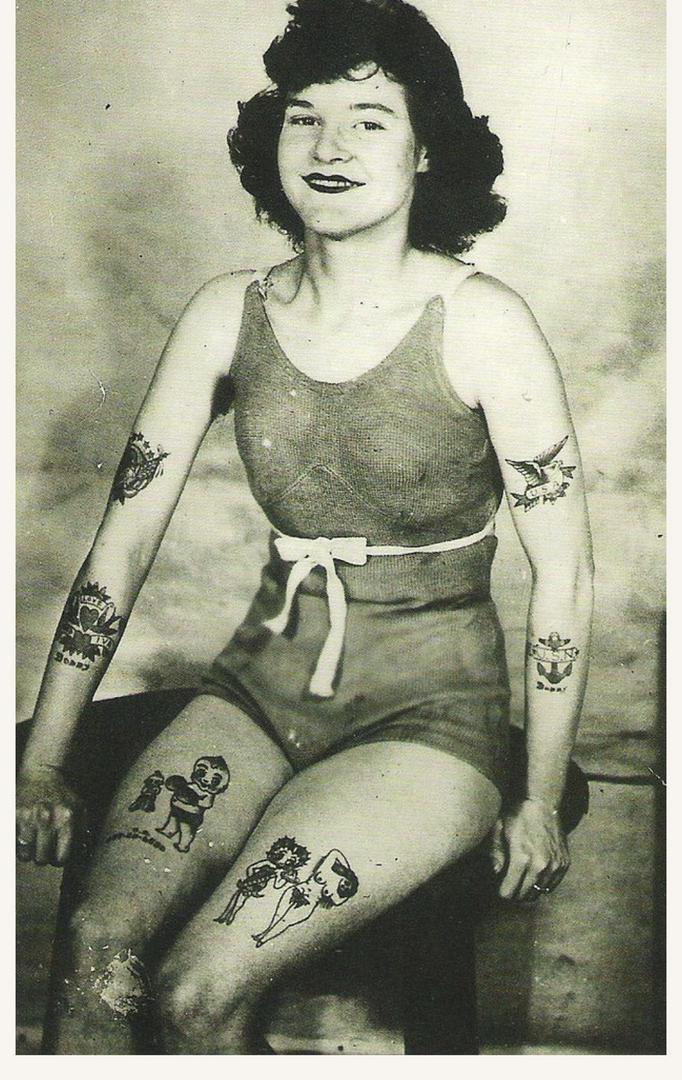
Tattoo 1950s Tattoos from the 1950s are often associated with a distinctive style that reflects the cultural and social atmosphere of the post-World War II era. This period saw the rise of traditional American tattooing, sometimes called "old school" or "classic" tattoo style, which became iconic and influential in tattoo history. The 1950s tattoo style is characterized by bold, clean black outlines, a limited but vibrant color palette (often including red, green, yellow, and blue), and simple shading techniques. The designs were typically straightforward and symbolic, often featuring nautical themes such as anchors, swallows, ships, and pin-up girls, reflecting the influence of sailors and military personnel who popularized tattoos during and after the war. Other common motifs included hearts, daggers, roses, eagles, and skulls, all rendered in a way that emphasized clarity and durability, suitable for the tattooing technology of the time. This eras tattoos were not only a form of personal expression but also a badge of identity and belonging, especially among subcultures like sailors, bikers, and rockabilly enthusiasts. The 1950s also saw the rise of famous tattoo artists like Norman "Sailor Jerry" Collins, who helped define the aesthetic with his innovative techniques and bold designs. His work contributed significantly to the popularity and style of tattoos during this decade. In terms of cultural significance, tattoos in the 1950s were still somewhat taboo in mainstream society but were gaining acceptance as symbols of rebellion, adventure, and masculinity. The imagery often conveyed messages of love, loyalty, courage, and freedom, resonating with the spirit of the times. Overall, the 1950s tattoo style remains highly influential today, with many modern tattoo artists drawing inspiration from its bold lines, iconic imagery, and timeless appeal.
4 hours ago
write a comment...