1/1

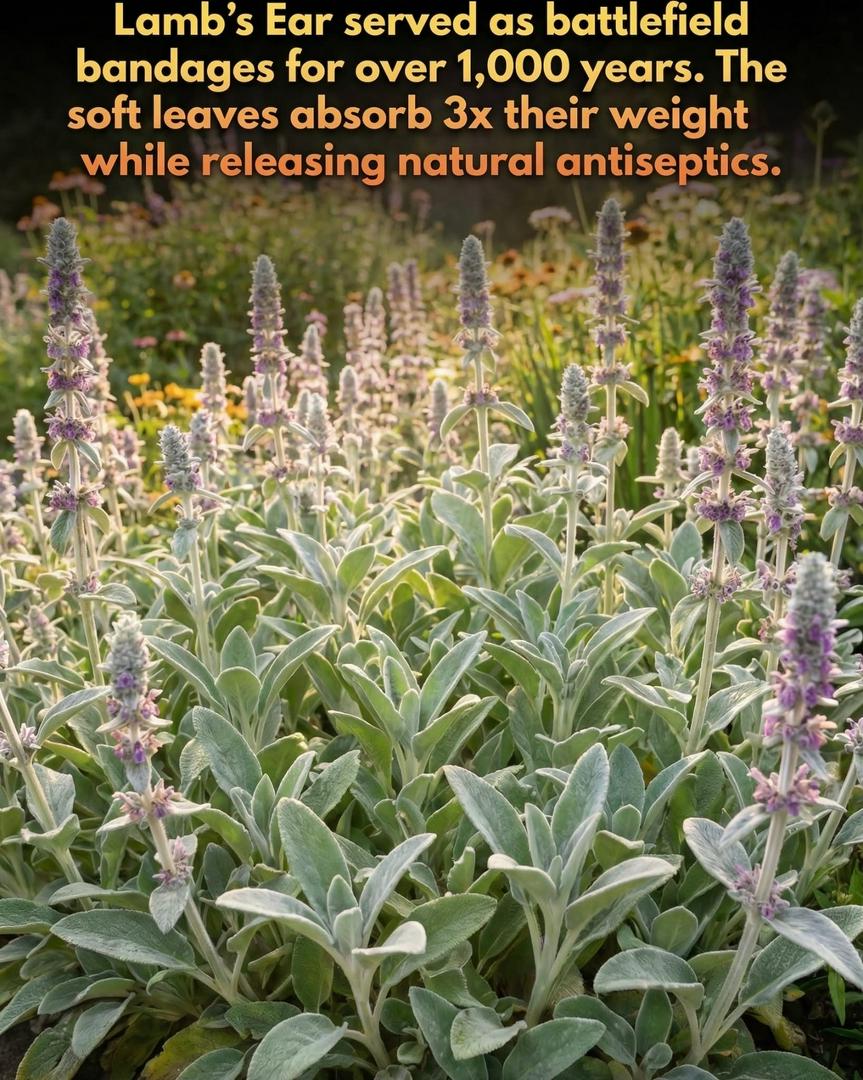
There’s ancient medicine growing in your garden… For centuries, the velvety silver leaves of Stachys byzantina, commonly known as Lamb’s Ear, served as a primary medical tool for soldiers on the front lines. Long before the invention of sterile gauze, medieval warriors and Civil War troops carried these fuzzy leaves into battle as emergency bandages. The plant's unique, woolly texture makes it exceptionally absorbent, capable of stopping blood flow and aiding in coagulation, while its natural antibacterial and anti-inflammatory properties work to prevent wound infections in the field. Today, this resilient garden favorite is being reimagined as a sophisticated solution for modern medicine. Researchers are increasingly turning to the Lamb's Ear to study its antimicrobial compounds, particularly as they look for new ways to treat antibiotic-resistant infections. By bridging the gap between ancient folklore and clinical science, this humble perennial proves that the future of wound care might be rooted in the wisdom of the past, growing right in your own backyard. source: Grieve, M. (1931). A Modern Herbal: The Medicinal, Culinary, Cosmetic and Economic Properties, Cultivation and Folk-lore of Herbs, Grasses, Fungi, Shrubs, & Trees with All Their Modern Scientific Uses. Harcourt, Brace & Company.
5 hours ago
write a comment...