1/1

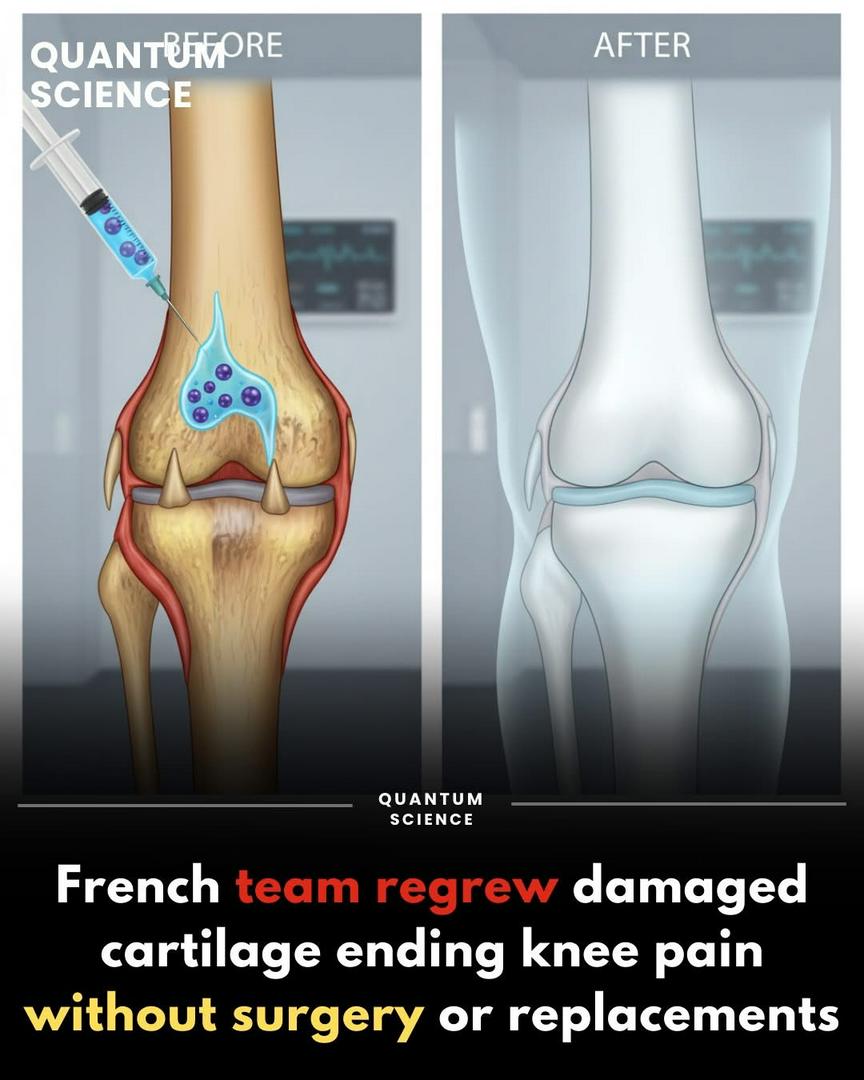
🧬🦵 French team regrew damaged cartilage ending knee pain without surgery or replacements. Scientists at the University of Strasbourg developed an injectable hydrogel containing cartilage progenitor cells that regenerate smooth, durable articular cartilage in damaged knees. Patients with bone-on-bone osteoarthritis regained normal cartilage cushioning, eliminating pain and avoiding knee replacement surgery. Knee osteoarthritis affects 365 million people worldwide, causing progressive cartilage destruction leading to bone grinding painfully on bone. Once cartilage is significantly damaged, it doesn't heal—the tissue lacks blood supply needed for repair. The only solution has been knee replacement surgery (700,000+ annually in the US alone), a major procedure with months of recovery and limited 15-20 year implant lifespan. The French approach injects a specially designed hydrogel directly into damaged knees. The gel contains millions of mesenchymal stem cells pre-treated to commit to becoming cartilage-producing chondrocytes. The hydrogel provides structural support, maintains cells in position, and releases growth factors promoting cartilage formation. Over 12 weeks, new cartilage tissue grows, filling defects and resurfacing damaged areas with smooth, durable tissue. Clinical trials with 156 patients facing knee replacement showed remarkable success: 78% avoided surgery, reporting significant pain reduction and improved mobility. MRI scans confirmed new cartilage formation with normal thickness and composition. The regenerated cartilage remained stable for at least three years. The procedure takes 30 minutes under local anesthesia with few complications. We're potentially making knee replacement—one of the most common surgeries—largely unnecessary by enabling biological cartilage regeneration. Source: University of Strasbourg, Science Translational Medicine 2025 What are your thoughts on using stem cells for tissue regeneration? Do you think this could be a game
2026-01-27

Kathy Moberg
That is incredible!! I would love to have that procedure!
01-27
Bayfield, CO
Reply
3

Kawaii Cube
Is this available in the USA?
01-28
Hayward, CA
Reply
2
More comments ...
write a comment...