1/1

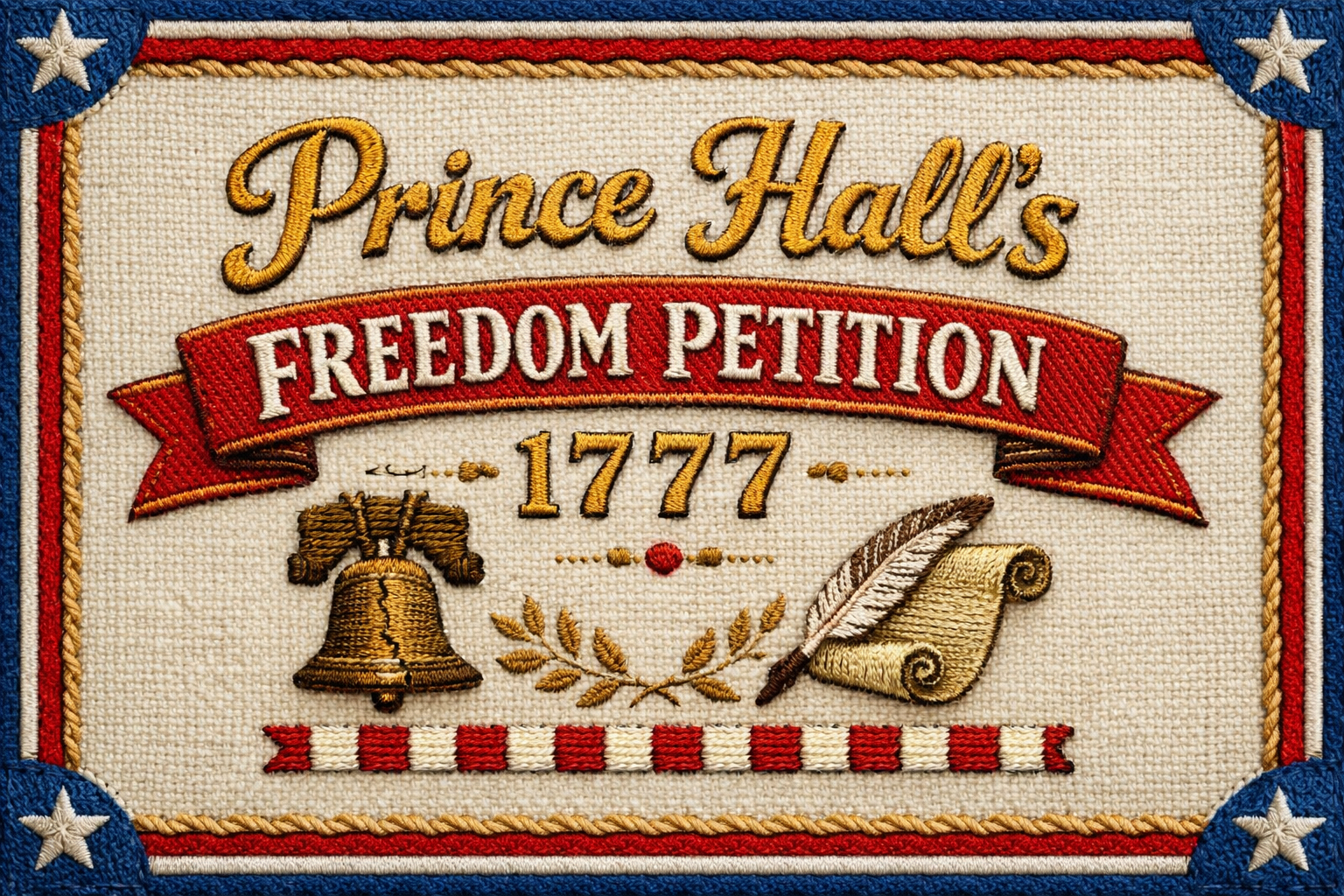
January 13, 1777 did not arrive with celebration or ceremony, but it carried one of the clearest moral confrontations of the Revolutionary era. On this day, Prince Hall and seven other Black men formally petitioned the Massachusetts legislature for freedom on behalf of those held in bondage. Their argument was not emotional pleading. It was political, logical, and devastatingly precise. If the colonies were fighting a war over natural rights and liberty, then slavery stood in direct contradiction to the very ideals being proclaimed. The petitioners pointed to the hypocrisy plainly. They reminded lawmakers that Black men were being taxed, governed, and even conscripted, while denied the freedom those sacrifices were supposedly defending. This was not a request for gradual reform or future consideration. It was a direct challenge to the legitimacy of slavery itself. The men asserted that freedom was not a gift to be granted at convenience but a right already owed. The legislature did not immediately abolish slavery in response. Power rarely moves that fast. But the petition mattered because it created a permanent written record of resistance from within the system. It forced lawmakers to confront the contradiction in ink, preserved in official archives. It also helped lay the groundwork for later legal challenges that would ultimately dismantle slavery in Massachusetts by the early 1780s. Prince Hall would go on to become one of the most influential Black leaders of the eighteenth century, founding Black institutions, advocating education, and organizing community defense. But on January 13, 1777, his legacy was already clear. He understood that freedom is not begged for quietly. It is demanded clearly, publicly, and without apology. History remembers battles and speeches. It should also remember petitions like this one. Because sometimes the most dangerous thing to a system built on contradiction is a document that tells the truth. #OnThisDay #January13 #America
Massachusetts • 2026-01-13

D U
Massachusetts outlawed the European custom of slavery in the 1780s, and no slaves were imported
since July 4 1776.
01-14
Natick, MA
Reply
1
More comments ...
write a comment...