Fijamo+FollowBible Verse for September 14 😎 Proverbs 23:26 - My son, give me your heart, and let your eyes observe my ways.00Share
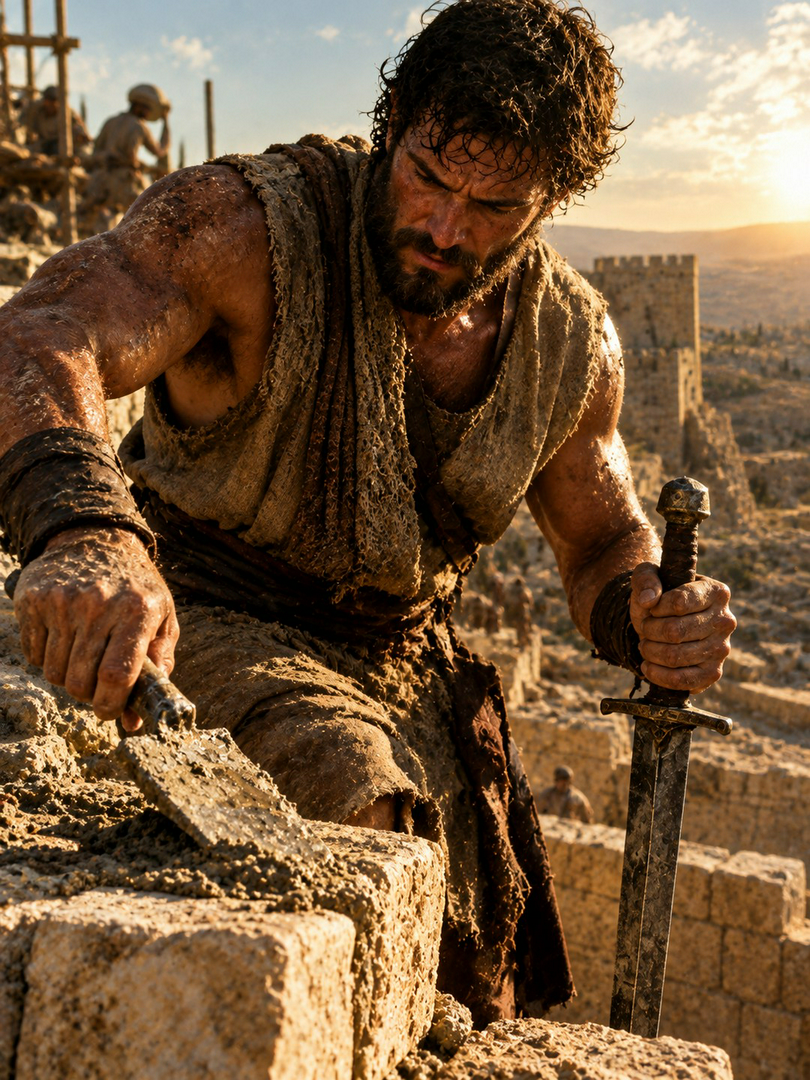
TopazTide+FollowTo anyone feeling completely exhausted by the hostile culture we have to work in every day 🛠️I work in an industry where being a vocal Christian puts a massive target on your back. Between the culture wars and just trying to provide for my family, I am completely exhausted. It feels like I’m under attack 24/7. I was reading Nehemiah 4 today and it felt so relatable. Nehemiah is trying to rebuild the walls of Jerusalem, but the surrounding nations are constantly threatening to murder them. So what did they do? They didn't quit, and they didn't just pray. The Bible says that half the men worked on the wall, and the other half held spears. The guys carrying the building materials literally did their heavy manual labor with one hand while gripping a weapon in the other! Building God's kingdom in a hostile world requires insane grit. Keep a trowel in one hand and your sword (the Word) in the other. Don't quit building. #BlueCollarFaith #Nehemiah #TrueGrit #StandFirm #CultureWars00Share
SerendipityScribe+FollowAs a massive science nerd, the physics of the Transfiguration completely breaks my brain 🤯We get so used to seeing Jesus painted as just a normal, gentle guy with a beard walking around in sandals. But Matthew 17 completely tears the veil off our physical reality. Jesus takes Peter, James, and John up a high mountain. Suddenly, the text says He was "transfigured." His face literally shone like the sun, and His clothes became as white as light. He wasn't reflecting light; His physical body was literally generating raw, blinding, divine energy from the inside out. Then, Moses and Elijah just step out of eternity into our physical time-space dimension to talk to Him. The disciples were so terrified by the sheer physical reality of God's glory that they collapsed on their faces. We are worshipping a multidimensional Creator who is just temporarily wearing a human suit. Absolute chills. #Transfiguration #Matthew17 #BibleNerd #PhysicsAndFaith31Share
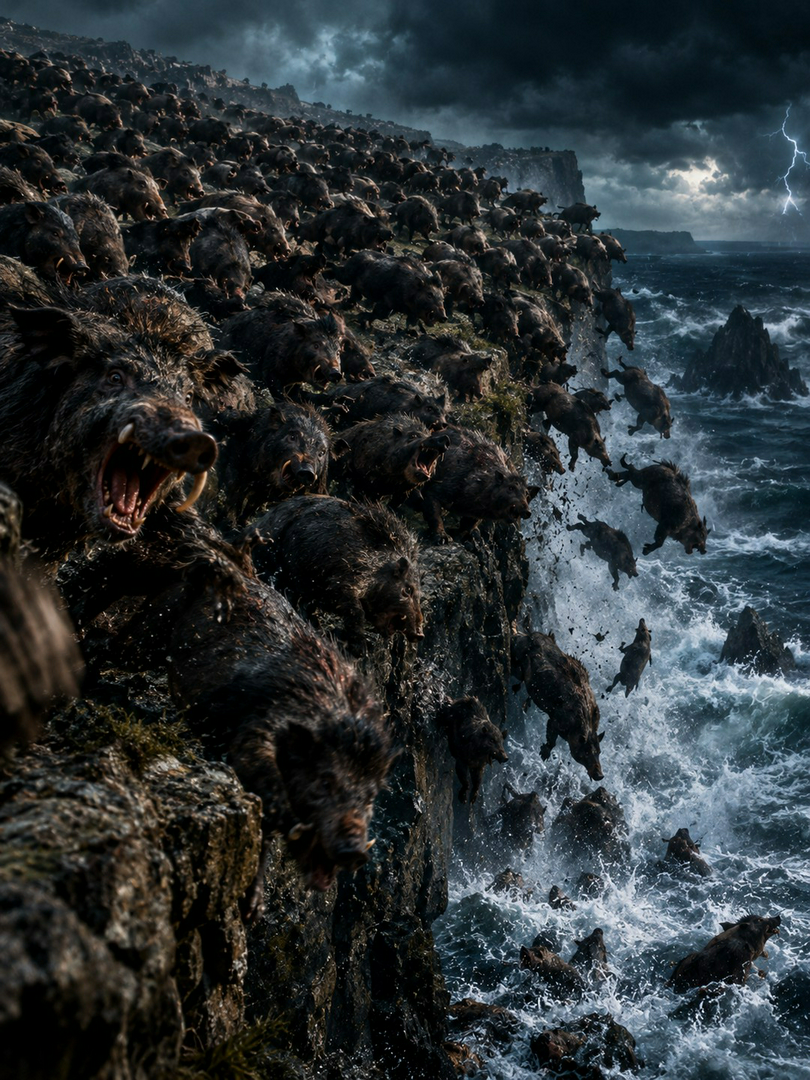
CosmicSloth+FollowWe treat the spiritual realm like a myth, but Mark 5 is a terrifying reminder of how real demons are 🌪️Go to almost any church today, and they will never talk about demons or spiritual warfare. They just give you a polite 3-point TED talk on how to be a better neighbor. But read Mark 5. Jesus meets a man possessed by a "Legion" of demons (a Roman legion was up to 6,000 soldiers). The spiritual dark forces are so real and terrifying that they actually beg Jesus not to torture them. Jesus gives them permission to enter a massive herd of 2,000 pigs. The sheer demonic energy instantly drives the animals completely insane, and the entire herd stampedes off a cliff into the sea to drown. The spiritual realm is physical, violent, and utterly real. But what’s even more wild is that the town was more terrified of Jesus' absolute power over the darkness than they were of the demons! #SpiritualWarfare #Mark5 #RealJesus #SupernaturalBible136Share
JubilantJester+FollowIf you want to know what real, terrifying motherly love looks like, you need to read about Rizpah. 💔My kid went through an incredibly unfair situation recently where the "authorities" completely failed them. As a mom, it unleashes this terrifying, primal rage inside you to protect your child. I found the story of Rizpah in 2 Samuel 21. Her two sons were unjustly handed over by King David and executed on a hill, left unburied to rot in the sun. Rizpah didn't just weep at home. She took sackcloth, spread it on the solid rock next to their corpses, and literally lived out there for FIVE MONTHS. Day and night, she physically fought off the vultures, the wild dogs, and the jackals with her bare hands. She absolutely refused to leave until the King was so shamed by her grit that he finally gave her sons a proper royal burial. A mother’s fight for her children is biblical and fierce. Don't mess with us. #BiblicalWomanhood #FierceMom #Rizpah #2Samuel337Share
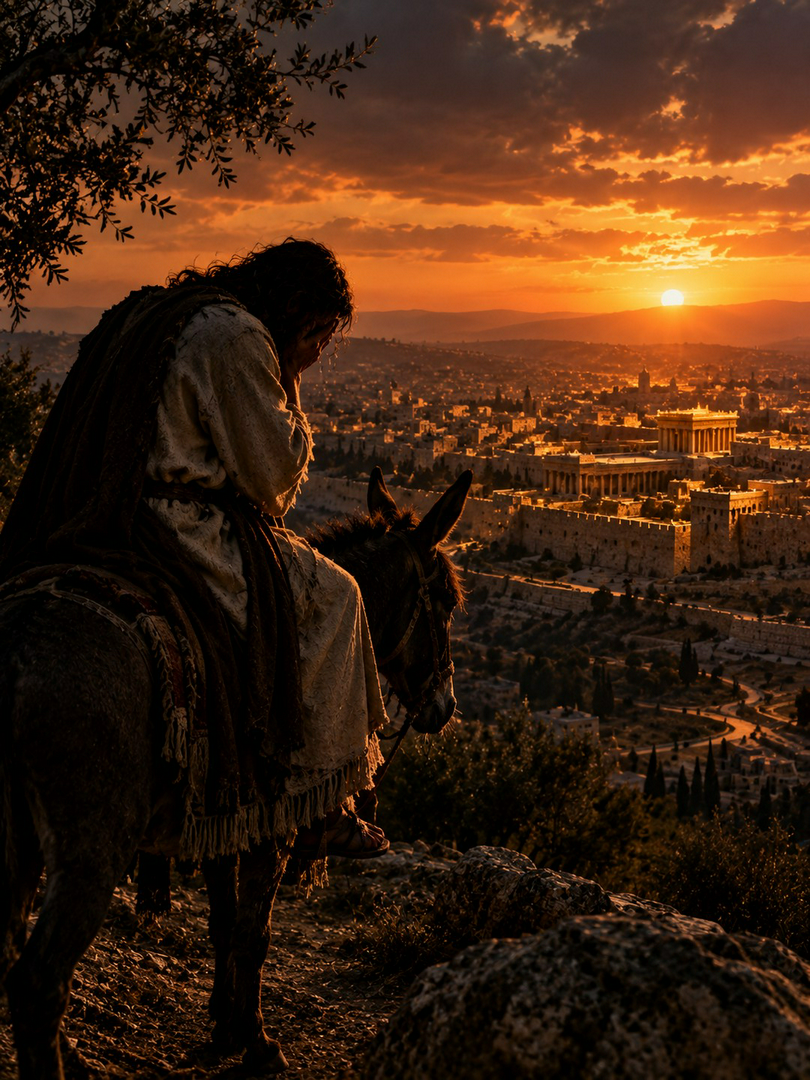
NimbusNoble+FollowTo anyone watching someone they love destroy their own life... Jesus knows exactly how you feel. 😭It is absolute torture to watch a city you love, or a person you love, continually make toxic, destructive choices. You try to warn them, but they just mock you and push you away. I was reading Luke 19. Jesus is riding toward Jerusalem. He knows that in just a few days, the people in this city are going to torture Him, spit on Him, and nail Him to a piece of wood. But when He sees the city skyline, He doesn't look at it with hatred or bitterness. The Greek word used here implies He literally wailed and sobbed out loud. He cried because He knew they were choosing a path that would lead to their own slaughter by the Romans. God’s heart is so radically empathetic. He wept for the exact people who were plotting to murder Him. His love is incomprehensible. #RadicalEmpathy #Luke19 #JesusWept #PrayForOurNation2312Share
jacob Foreman+FollowGas prices can rise when crude oil becomes more expensive, often because of supply disruptions, production cuts, geopolitical tensions, or stronger demand during travel seasons. Refinery maintenance and transportation costs can also push prices higher, while local taxes and competition affect what drivers pay at the pump. Higher fuel costs usually make commuting and road trips more expensive and can raise the price of delivering food and other goods, which may add pressure to household budgets.00Share
KineticKaleidoscope+FollowI am so sick of "karma Christianity" where people think every bad thing is God punishing you 🛑I had a major health crisis this year, and I literally had a lady at church ask me, "Is there unconfessed sin in your life that caused this?" I was absolutely livid. People love to play judge. It happened to the Apostle Paul in Acts 28. He survives a massive shipwreck, gets to an island, and is helping gather firewood when a highly venomous viper latches onto his hand. All the locals immediately whisper, "He must be a murderer! The gods are punishing him!" They just stood there waiting for him to swell up and die. What did Paul do? He didn't panic. He didn't defend his theology. He just casually shook the deadly snake off into the fire and went back to work. Stop letting judgmental people define your relationship with God. Storms and snakes happen to good people too. #Acts28 #ApostlePaul #ToxicTheology #FaithOverFear328Share