Category Page health

Hatter Gone Mad

A U.S. high school student discovered that oregano oil killed 100% of bacteria in laboratory tests—performing better than the widely used antibiotic amoxicillin under the same conditions. The study focused on oregano oil’s active compound, carvacrol, which damages bacterial cell membranes and disrupts vital functions. Unlike antibiotics that target specific pathways, carvacrol attacks bacteria in multiple ways. Antibiotic resistance is a growing global health crisis, with many bacteria evolving resistance to conventional drugs. Natural compounds like oregano oil are being studied as complementary or alternative treatments. Researchers caution that lab results do not automatically translate to safe medical use. Dosage, toxicity, and delivery methods must be rigorously tested before human application. Nevertheless, scientists say such findings highlight the untapped potential of plant-based antimicrobials and the valuable role young researchers can play in scientific discovery. #UnboxFactory #MedicalScience #AntibioticResistance #YoungInnovators #Health #facebookrepost

J.Smith

I’m sitting here minding my own business when my buddy walks in, gloomy, saying he doesn’t know what to do. He can’t go back over there—she’s so vicious and mean. This is the same good friend I’ve mentioned before, the one who suffers with mental illness. And so does her now ex-boyfriend. I call her, and immediately she accuses me of working with my ex-girlfriend to control her mind and her boyfriend’s mind. It’s a disturbing conversation with a flat, non-emotional tone. I won’t make a diagnosis, but the reader can decide for themselves what that sounds like. I hang up and talk to the other gentleman. He’s got similar symptoms, though they manifest differently. In reality, I’d like to see them separated. It would be better for both—they each need help in different ways. She could never get help because her guardian, even though she’s a middle-aged woman, stands in the way. She doesn’t believe in doctors; she believes in prayer. But prayer hasn’t worked very well. They’re both my friends. I love them both. I became friends with them before I knew—before they began to decline into mental illness. Now they’re walking all over Jacksonville. One is homeless. The other survives only because a parent takes care of her, but the illness is out of control. Prayers don’t change it. Pretending to believe the nonsense they’re saying doesn’t change it. Only medical help—and the willingness to stand by them and get that medical help—will change it. And it’s not the government’s responsibility. It’s yours. It’s your neighbors’. If you want to get them help, then help them. And so that’s where we stand this morning: the beauty of chaos, interrupting a quiet day. #HelpingAFriendWithMentalIllness #CaringForAFriendWithMentalIllness #SupportingFriendsWithMentalHealthChallenges

justme

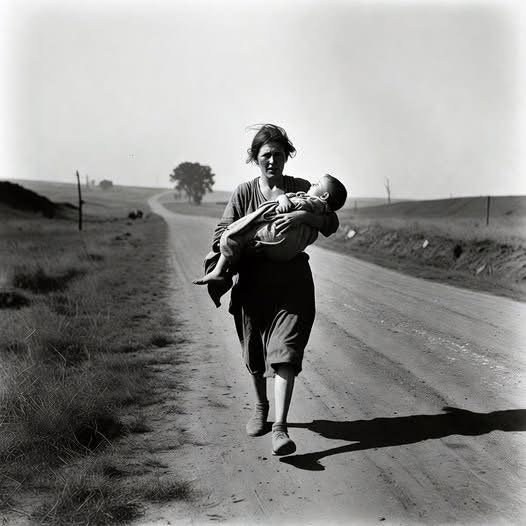
For thirty-one days—from March 3 to April 3, 1926—twenty-seven-year-old Mae Bellamy walked 400 miles carrying her five-year-old son Thomas on her back, walking from dawn to dusk through rain and mud and cold, sleeping in ditches and barns and under bridges at night, begging food from strangers, talking to Thomas the entire way—telling him stories, singing him songs, telling him they were almost there even when they weren't even close—because Thomas had a growth in his throat that was slowly choking him to death and the nearest hospital was 400 miles away and no doctor within 200 miles could remove it and Mae had been told by every doctor she could find that Thomas would die within two months if the growth wasn't removed and Mae had decided that Thomas was not going to die, not while Mae was breathing, not while Mae could still walk, and the only way to save Thomas was to get him to a hospital 400 miles away and Mae was going to carry him there if she had to. Mae had taken Thomas to three doctors in January 1926—doctors in small towns within fifty miles of Mae's home in rural Arkansas—and all three had examined Thomas and all three had said the same thing: the growth in Thomas's throat was too large and too close to his airway to remove safely with the equipment available in their small-town clinics, and Thomas needed surgery at a hospital with proper surgical facilities, and the nearest such hospital was in Memphis, Tennessee, 400 miles away. Mae had no money for train fare. Mae had no automobile. Mae had no way to get to Memphis except to walk, and Mae had no one to help her—Mae's husband had died two years earlier, Mae had no family nearby, Mae had no neighbors who could help—and the doctors had told Mae they were sorry but there was nothing more they could do. Mae left her home on March 3, 1926 Continued story in comments

Tabby

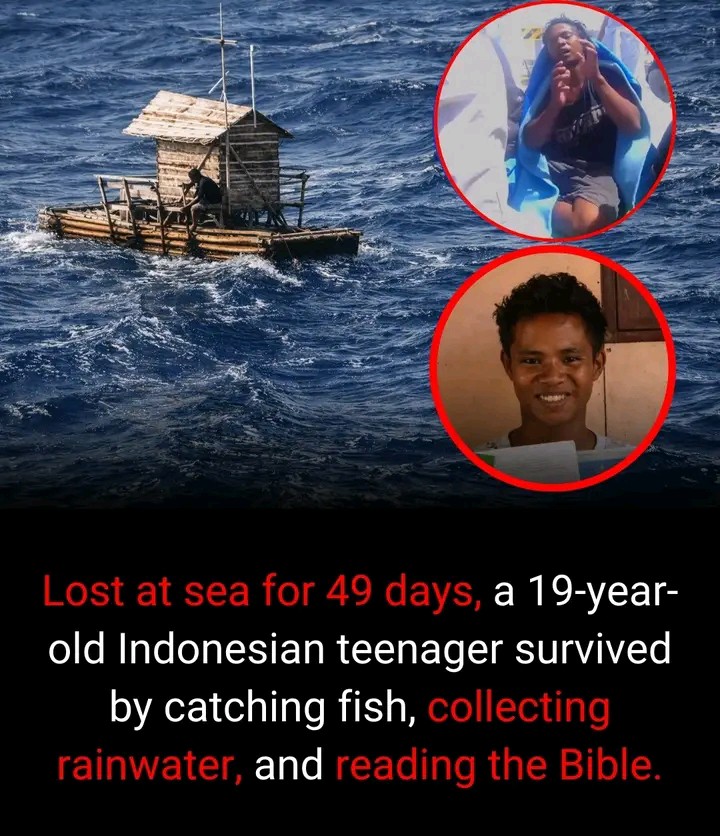
A 19-year-old Indonesian teenager named Aldi Novel Adilang survived an almost unbelievable 49 days lost at sea and his story stunned the world. Aldi was working alone on a small floating fishing hut, called a rompong, off the coast of North Sulawesi, Indonesia, when a powerful storm snapped the rope anchoring it to the seabed. With no engine, no paddle, and limited supplies, he was slowly carried out into the open ocean. Within days, his food ran out. To survive, Aldi began catching fish and cooking them over a small fire. Fresh water became his biggest challenge. He relied on rainwater, sometimes wringing water from soaked clothes after rainfall. Several ships passed him, but none noticed the tiny hut drifting in the vast sea. Throughout the ordeal, Aldi later said that prayer and reading his Bible gave him strength and helped him fight despair when rescue seemed impossible. After nearly seven weeks adrift, a Panamanian-flagged cargo ship finally spotted him near waters approaching Guam and pulled him to safety. Miraculously, he survived. Aldi’s story is a powerful reminder of human resilience, faith, and the will to survive against overwhelming odds.

John Paul Valdez

People Who Only Move When They’re Dying Might Be onto a Dark Superpower Across the country, a growing number of people say they only spring into action when they’re on the edge of collapse—when their job, health, or housing is about to fall apart. In those moments, they become laser‑focused, capable of building legal cases, launching side hustles, or turning half‑finished ideas into something real. But once the crisis passes, they let things slide until the next disaster hits. Many now see this pattern not as random laziness, but as a survival skill wired by trauma: a brain that learned to manufacture emergencies just to feel allowed to act. The real challenge, they say, isn’t surviving the next crisis. It’s learning to move before the house is on fire, and treating their future selves like someone worth saving.