Category Page health

John Paul Valdez

There is a specific kind of exhaustion that comes from living a life where your physical body and your mental presence are never in the same place. For me, it feels like a perpetual haunting. When I am standing in the wide, sun-scorched expanse of Texas, my mind is often wandering through the mist-heavy treelines of Oregon. Then, when I finally find myself in the Pacific Northwest, the phantom heat and specific gravity of the south pull me back. It is a restless internal migration that never truly ends, leaving me feeling like a stranger in both places. This disconnection extends into the very fabric of my daily rhythm. At work, I am mentally already at home, seeking the sanctuary of my private thoughts and the peace of my own space. Yet, the moment I cross my own threshold, the weight of professional responsibilities and the unfinished business of the day follow me in, looming like shadows in the corner of the room. I am never fully "there" because I am always mourning where I just was or bracing for where I have to go next. I have been cast to and fro through the storms of change and expectation. These aren't just geographic shifts; they are the spiritual and emotional gales that refuse to let me anchor. This constant displacement creates "images of depletion," where the energy required to simply exist in the present is swallowed by the winds of elsewhere. I am learning that the struggle is to find a way to quiet the storm from within—to stop being a passenger to the wind and start becoming the center of the calm. My goal now is to bridge that gap, to stop the "to and fro" and finally allow my spirit to catch up to my skin.

Cooper Hamilton

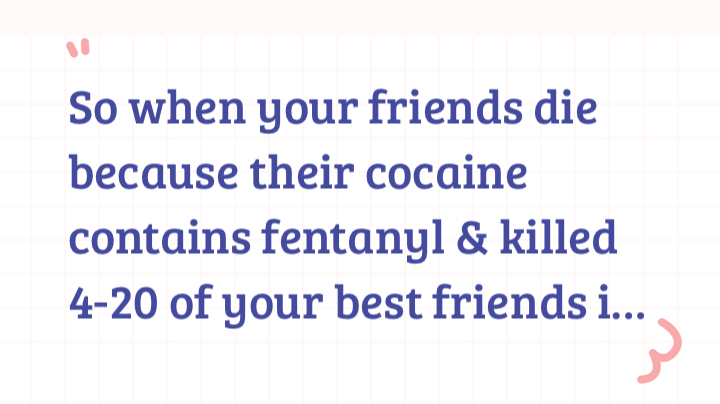
So when your friends die because their cocaine contains fentanyl & killed 4-20 of your best friends in a year; then you complain about the attacks. Unless it is 90-99 % pure, it does not be on the street or distributed! Cocaine, Herion, & PCP must be pure of the same strength so you pay for what you are supposed to; get the true formula & have it last for days or weeks when you are in the mode to do it. Not get garbage to let you down & you spend all or your$ to never get what you hit 2 years ago! I can say that the drug dealers made me quit 30 years ago & I am glad I said that as I have stuck to staying away because the 89’s you got real & there is no real in the US now including Rx antibiotics that give you uncontrollable diarrhea & caused me to quit! Best decision in my life! Changed my crazy friends & my life changed for the better! Addiction is an issue but if you can’t get the strength that you remembered, it causes issues. I just wish they offered low income programs

John Spencer Ellis

How can you spot a pathological liar? Ever wondered if someone’s lies go beyond the occasional white fib? Let’s dive into the world of pathological lying – a behavior that’s more than just dishonesty. Clinically, pathological lying (also known as pseudologia fantastica or mythomania) is defined as a persistent, pervasive, and often compulsive pattern of excessive lying that causes significant impairment in social, occupational, or other areas of life. It leads to marked distress, poses risks to oneself or others, and lasts longer than six months. Unlike everyday lies told for gain or to avoid trouble, these are habitual, elaborate falsehoods without clear motive – the liar might even believe them or mix truth with fantasy. It’s not a standalone diagnosis in the DSM-5 but often links to personality disorders like narcissism or antisocial traits. Experts note it’s disproportionate to any benefit, manifesting over years. Spot it in action? Here are two everyday examples: 1 The Chronic Storyteller at Work: Imagine a colleague who constantly fabricates grand tales about their weekend adventures – claiming they partied with celebrities or climbed mountains – even when no one’s asking. These lies pile up, erode trust, and isolate them, but they can’t stop, despite the fallout. 2 The Family Fabricator: Think of a relative who invents health crises or dramatic family secrets to garner sympathy and attention. They might say they’re battling a rare illness (when healthy) or accuse others falsely, creating chaos without remorse or reason. If this sounds familiar, set boundaries and encourage professional help – therapy can uncover roots like low self-esteem. Knowledge is power! #MentalHealthAwareness #PathologicalLying #TruthMatters #itsnotyou #malignantnarcissistproblems